


EMS Body Sculpting for Your Abdomen in Hornchurch: How It Works
Updated: 2 days ago
A more defined abdomen isn’t the same as weight loss. EMS body sculpting for the abdomen in Hornchurch uses electromagnetic stimulation to prompt targeted muscles to contract. It’s a body-contouring treatment, not a weight-loss method. It may help improve muscle tone, but it doesn’t replace exercise or broader health goals.
It’s natural to want to understand a treatment before deciding whether it feels right for you. This guide explains how EMS stimulates abdominal muscles, what a session may feel like and who may be suitable, including health considerations that can affect whether treatment is appropriate.
You’ll also learn how regular movement and protein intake can support muscle maintenance, why results vary and what to expect from a course of treatment. The aim is to help you make an informed decision, with a clear understanding of EMS’s potential benefits and limits.
Table of Contents
How does Ems Body Sculpting work?
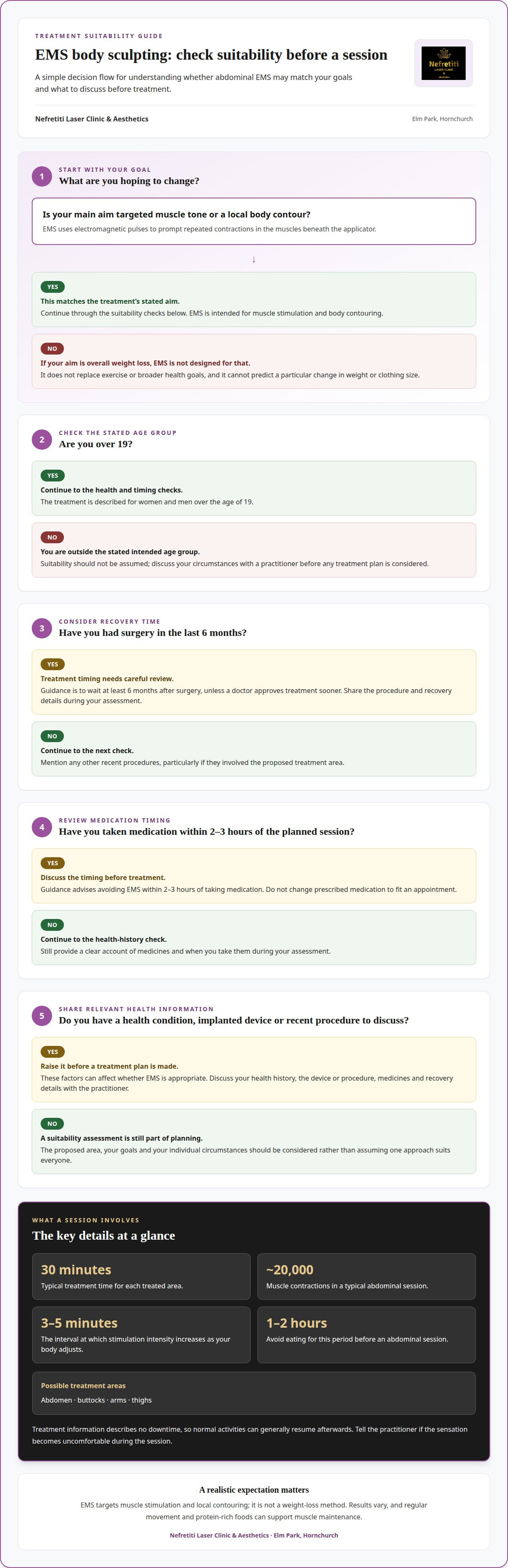
People considering EMS body sculpting for the abdomen in Hornchurch should know its main purpose: stimulating targeted muscles. Electromagnetic pulses prompt repeated contractions, creating a demanding muscle stimulus without requiring you to perform sit-ups. The treatment is non-invasive and aims to support muscle tone and body contouring, rather than reducing overall body weight. During a session, intensity increases every 3 to 5 minutes as your body adjusts to the sensation.
Applicators can be placed over the abdomen, buttocks, arms or thighs, depending on the area being treated. A session lasts 30 minutes per treated area. The repeated contractions challenge the muscles beneath the applicator; they don’t work every muscle group or replace a conventional exercise routine. Treatment planning considers your chosen area and the contour you hope to address, rather than applying an identical approach to everyone.
Treatment aims may also include circulation and drainage. EMS-related circulation and metabolic activity may support reduced fluid retention and lymphatic drainage in the treated area. These effects are distinct from muscle toning and shouldn’t be confused with a guaranteed change in appearance. A consultation can clarify your main goal, whether muscle definition or a local contour, and whether the proposed treatment area fits your aims.
EMS differs from fat freezing and radiofrequency body sculpting because each method uses different energy and targets different effects. EMS uses electromagnetic stimulation to prompt muscle contractions; fat freezing uses cooling, while radiofrequency uses heat. These treatments aren’t interchangeable: muscle definition is a different aim from targeting localised fat or heating tissue. Start by identifying the change you want, rather than choosing a treatment by name alone.
A consultation for EMS body sculpting for the abdomen in Hornchurch should cover your treatment goals, medical history and suitability. The practitioner can consider applicator placement and stimulation intensity rather than assume the same plan suits everyone. Someone seeking abdominal muscle tone, for example, has a different target from someone considering the thighs. Discuss relevant health conditions, implanted devices, recent procedures and medicines before planning treatment.
To prepare for an abdominal session, avoid eating for 1 to 2 hours beforehand. Share relevant medical information during your consultation, including recent procedures, implanted devices and medicines. Wear clothing that allows access to the abdomen, and follow the appointment instructions you receive. These practical details help the practitioner assess the treatment area and plan the session around your circumstances.
Once positioned, the applicator delivers pulses that contract the abdominal muscles, with intensity adjusted every 3 to 5 minutes. The sensation is repeated muscle tightening while you remain still. Treatment information describes no downtime, so normal activities can generally resume afterwards. Tell the practitioner if the sensation becomes uncomfortable during the session, rather than waiting until it ends.
Candidate suitability and contraindications
EMS body sculpting is intended for women and men over the age of 19. It’s designed for people seeking targeted muscle tone, rather than a treatment for overall weight loss. The abdomen is a common focus, while the buttocks, arms and thighs are other possible treatment areas. The main suitability question is whether muscle stimulation matches your goal and whether your health history permits treatment.
A typical abdominal session lasts 30 minutes and produces around 20,000 muscle contractions. These repeated contractions challenge the targeted muscle, supporting a muscle-building response over a course of treatment. Strong contractions alone don’t determine the result. The treatment area, planned course and how your body responds all influence changes in muscle tone.
Muscle stimulation and fat reduction are related aims, but they aren’t identical outcomes. EMS is described as stimulating muscle and triggering a metabolic response in the treated area. That doesn’t make it a general weight-loss method, and the number of contractions can’t predict a specific change in body shape. Set a realistic goal around local contour and muscle definition, not a particular weight or clothing size.
Recent surgery needs careful consideration before treatment. The guidance is to wait at least 6 months after surgery, unless a doctor approves treatment sooner. This matters because the body may still be recovering, and the treated area may not be ready for stimulation. Share the procedure and recovery details during your assessment, especially if surgery involved the abdomen, buttocks or another proposed treatment area.
Medication timing also matters: guidance advises avoiding EMS within 2-3 hours of taking medication. Provide a clear account of medicines and when you take them during the consultation. Don’t change prescribed medication to fit a treatment appointment. Health conditions, recovery and personal goals should be discussed before a plan is made, so the practitioner can assess the relevant risks and treatment area.
A consultation helps establish whether the proposed area and expected muscle effect fit your aims. Someone seeking abdominal tone, for example, has a different target from someone interested in the thighs. Discuss recent surgery, medicines and any concerns before scheduling a session. This allows treatment timing and a suitable plan to be considered, rather than assuming the same approach suits everyone.
For a considered next step, you can book a treatment consultation to discuss your goals and suitability.
Maintaining results with protein and regular movement
EMS results develop over time, so one session isn’t a complete course. A typical course includes at least six sessions, with two to three days between appointments. This interval gives muscles time to recover between treatments. Your plan should also reflect the area treated, your goals and how your muscles respond.
Visible changes may begin two to four weeks after the course. Full results usually show four to six weeks after the final session, with peak results expected three months after treatment. Keep these stages in mind when judging progress. Comparing your abdomen immediately after an appointment with its appearance later can give a misleading impression.
Regular movement helps maintain muscle function outside the treatment room. Build a routine around activities you can sustain, such as brisk walking, cycling or strength exercises. Include movements that challenge your abdominal muscles alongside exercises for the rest of your body. EMS contractions provide stimulation during treatment, but don’t replace the varied demands of regular exercise.
Protein supports the body’s normal muscle repair and maintenance. Include protein sources in meals, such as eggs, beans, lentils, fish or yoghurt. Pairing these foods with a balanced diet provides useful nutrients alongside exercise. No single food preserves treatment results; consistent eating habits and movement work together over time.
Aftercare also means allowing recovery between appointments. Keep the recommended two-to-three-day gap rather than scheduling sessions on consecutive days. If your treated muscles feel tired after an appointment, choose comfortable movement and return to your usual exercise routine when you feel ready. Recent surgery or a change in health is a reason to discuss timing before another session.
Muscle gains may start to soften three to six months after treatment. Regular exercise and adequate protein support ongoing muscle maintenance, while a maintenance session may be considered as changes develop. The need for further treatment depends on your goals and how your body responds, not a fixed schedule for everyone.
Use consistent conditions when tracking progress. Compare your posture and abdominal appearance at similar times, for instance, rather than judging after a meal or workout. Note when the course ended and review changes around the two-to-four-week and four-to-six-week milestones. This helps distinguish gradual progress from day-to-day changes.
Think of treatment as one part of a longer routine. A course, regular movement and protein-containing meals each play a different role. Keeping these habits steady gives you a practical foundation for maintaining muscle tone after your final appointment and helps set realistic expectations for longer-term results.
EMS muscle stimulation and abdominal sculpting
EMS abdominal sculpting uses electromagnetic stimulation to prompt contractions in selected muscles. Understanding what the stimulus targets helps distinguish muscle-focused contouring from broader changes in body shape.
Electrical Muscle Stimulation
Electrical muscle stimulation describes using an external signal to prompt muscle contractions. In EMS body sculpting, an applicator delivers electromagnetic energy to a chosen area, such as the abdomen. The muscle responds to the signal without you having to perform a movement such as a sit-up.
This matters because the treatment targets muscle activity, not every element of a workout. A run, for example, also involves movement, balance and cardiovascular effort. EMS is a specific aesthetic approach to local muscle stimulation, not a complete substitute for exercise or a general fitness programme.
Muscle Tone and Weight Loss
Weight loss and muscle tone describe different aspects of body composition. Someone who loses weight may notice a smaller waist, but that change alone doesn’t show whether their abdominal muscles have become stronger. Conversely, muscle-focused treatment doesn’t address overall body weight.
This distinction helps you set a useful goal. If your priority is general weight management, a local muscle treatment won’t meet that aim by itself. If you’re interested in abdominal definition, consider muscle tone separately from the number on the scales and changes in how your clothes fit.
EMS and Abdominal Muscles
For abdominal treatment, the applicator is positioned to direct stimulation towards selected muscles. Repeated contractions provide a stimulus intended to support muscle development and contouring. Placement matters because the intended effect is local to the area receiving stimulation.
The sensation and response can differ from person to person. Abdominal stimulation, for example, may feel different from voluntary contractions during controlled exercise. This doesn’t mean the device works every muscle equally or guarantees a particular definition. The treatment plan should reflect the targeted area and the outcome you hope to achieve.
Abdominal Muscle and Fat Results
Abdominal appearance reflects more than muscle alone. The amount and distribution of tissue over the muscles also influence how visible their contours are. EMS is intended to stimulate muscle, while its proposed effect on fat in the treated area is separate from whole-body weight reduction.
Two people with similar muscle tone may have different-looking abdominal contours because their bodies distribute fat differently. A muscle-focused treatment can’t control that distribution or promise a particular outline. Keep expectations centred on targeted contouring, and assess progress in context rather than treating a single measurement as proof of change.
EMS as body contouring rather than weight loss
EMS is best understood as a targeted aesthetic treatment for muscle definition, not a method for reducing overall body weight. Its intended focus is the muscle beneath the applicator, such as the abdominal muscles, rather than changes across the whole body. This distinction helps you match the treatment to your goal before considering a course.
Weight loss and body contouring describe different changes. Someone may lose weight through broader lifestyle changes without strengthening their abdominal muscles; conversely, muscle stimulation can focus on a selected area without addressing weight throughout the body. The scales alone therefore don’t show whether someone has developed more muscle tone or changed a particular contour.
A 30-minute session per treated area focuses on repeated muscle contractions. That targeted muscle work is not the same as a whole-body workout, which involves movement, cardiovascular effort and several muscle groups. EMS also doesn’t replace regular exercise or the broader habits involved in managing weight. Think of it as one specific aesthetic approach, rather than a shortcut to general fitness.
The practical question is what change you want to see. Someone concerned about abdominal definition may be interested in a local contour, for example, while someone mainly seeking a lower number on the scales has a different goal. EMS aligns with the first aim because it focuses on targeted muscle stimulation. It shouldn’t be presented as a way to achieve weight loss throughout the body.
Muscle and fat affect the visible outline in different ways. Stronger abdominal muscles can contribute to definition, while the amount and distribution of fat influence how clearly those muscles show. A treatment focused on muscle can’t control every factor that shapes the abdomen. A realistic assessment considers your desired contour, the treatment area and the difference between muscle tone and weight.
Results need time and a course, rather than a single appointment. A recommended course can range from 6 to 24 treatments, depending on the goals set. Ideally, sessions are scheduled two times per week, with at least two days between them. These intervals support a planned treatment schedule; they don’t turn the course into a replacement for movement or weight-management habits.
Regular exercise remains useful because it challenges muscles through movement beyond the treatment session. Walking supports general activity, for instance, while strength exercises work muscles through controlled movement. Food choices and activity habits also contribute to overall weight management. Keeping these aims separate helps you judge an aesthetic treatment by its intended role, rather than expecting it to replace a complete fitness programme.
The clear takeaway: choose EMS for a targeted muscle-contouring goal, not as a weight-loss solution. A consultation can help clarify whether the intended abdominal change fits that distinction.
Nefretiti Laser Clinic & Aesthetics: Laser Hair removal
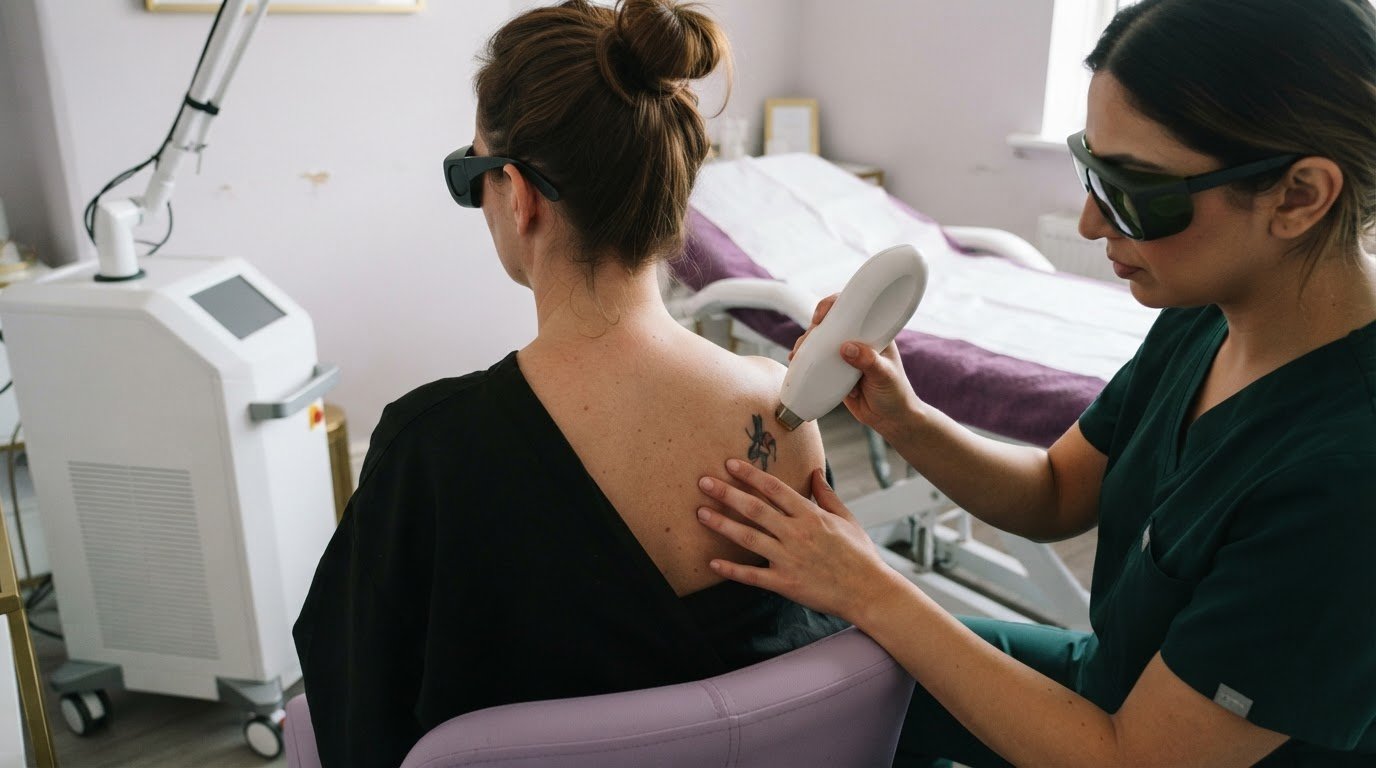
Nefretiti Laser Clinic & Aesthetics can help if you’re exploring a separate concern alongside abdominal contouring, such as unwanted hair. Laser hair removal is distinct from EMS: it addresses hair reduction, not muscle tone or weight. A consultation gives you the chance to discuss your goals and whether laser hair removal suits your needs.
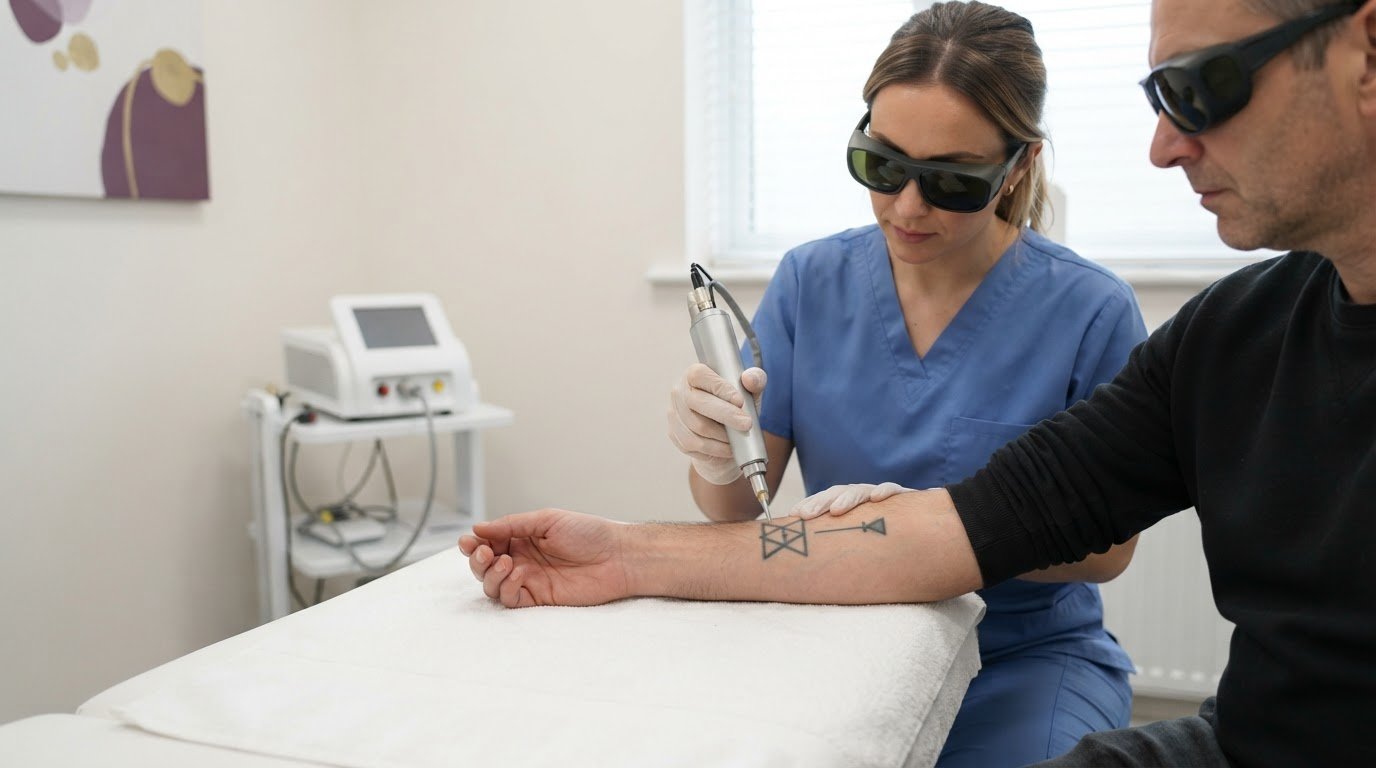
Based in Elm Park, Hornchurch, Nefretiti Laser Clinic & Aesthetics also offers laser tattoo removal, charcoal facials and IPL skin treatments. These options address different concerns, so the right conversation depends on what you’d like help with. If you’re considering laser hair removal in Hornchurch, contact the clinic to discuss your next step.
Take the next step towards a considered treatment plan
Before arranging treatment, decide what change you hope to achieve and what would feel like meaningful progress. A clear goal makes it easier to discuss your expectations, concerns and health history openly, rather than focusing only on a particular appearance.
If you’re considering EMS body sculpting for the abdomen in Hornchurch, a personalised assessment can help establish whether it suits your aims. Suitability depends on your health history, treatment area and expectations, so use the conversation to raise any questions before deciding.
Nefretiti Laser Clinic & Aesthetics offers a calm next step: discuss your goals and understand the proposed approach before deciding how to proceed. There’s no need to rush. An informed choice starts with a conversation that feels right for you.
Move forward at your own pace, with a clearer sense of what you want and the questions you’d like answered.
Frequently Asked Questions
How long does each session take?
An EMS session lasts 30 minutes per treated area. For an abdominal appointment, that means the stimulation itself is planned around the area being treated, rather than a full-body workout. Allow extra time for discussion and preparation around the appointment. If you’re considering more than one area, such as the abdomen and thighs, the overall appointment time depends on the treatment plan.
When will I see results?
Visible changes may begin two to four weeks after completing a course. Full results usually show four to six weeks after the final session, with peak results expected three months after treatment. These milestones offer a more useful way to assess progress than checking immediately after each appointment. Take progress photos in similar lighting and posture to compare changes in abdominal definition over time.
How much does EMS body sculpting cost?
The cost depends on the treatment plan and is provided after a quote request. Factors include the area being treated, the number of planned sessions and your goals. A course isn’t the same as a single appointment, so ask for the proposed plan and its total cost before deciding. This helps you understand what the quote covers and whether it suits your budget.
Who is a good candidate?
EMS is intended for women and men over the age of 19 who want targeted muscle contouring, rather than general weight loss. Suitability also depends on health history, medicines and any recent procedures. For example, after surgery, guidance advises waiting at least six months unless a doctor approves treatment sooner. Share relevant details during the consultation before agreeing to an appointment or treatment plan.
Does EMS help with loose skin after weight loss?
EMS primarily stimulates underlying muscles; don’t assume it will tighten loose skin after weight loss. Muscle definition and skin laxity are different concerns, so a change in abdominal muscle tone may not resolve excess or loose skin. If your main concern is skin texture or laxity, explain this during an assessment. That discussion can clarify whether the treatment’s muscle-focused aim matches what you hope to address.
Does it hurt, and what are the side effects?
The main sensation is repeated, strong muscle contractions, which can feel intense as stimulation increases. The intensity is adjusted gradually, and you should speak up if it becomes uncomfortable. Treatment information describes EMS as having no downtime, but that doesn’t mean you should ignore discomfort during a session. Discuss concerns beforehand, and report unexpected symptoms rather than continuing without telling the practitioner.
What is EMS body sculpting and how does it work on the abdomen?
EMS body sculpting uses electromagnetic stimulation to prompt contractions in targeted muscles beneath the applicator. On the abdomen, the aim is to stimulate abdominal muscles and support a more defined contour. It’s a muscle-focused treatment, not a substitute for exercise or a general weight-loss method. During a consultation, discuss the specific change you want so the treatment area and expectations can be considered together.
What are the prices for EMS abdominal sculpting in Hornchurch?
The price for EMS abdominal sculpting in Hornchurch depends on your proposed treatment plan and is provided after a quote request. Cost factors include the abdomen as the treatment area, the number of sessions and your goals. Ask for the course details alongside the quote, so you can compare the planned sessions with your expectations and make an informed decision before booking.
Ready to book? See prices and book EMS body contouring at our Elm Park, Hornchurch clinic – 2 minutes from Elm Park station.

Comments