


IPL for Sun Spots in Hornchurch: Who It May Suit
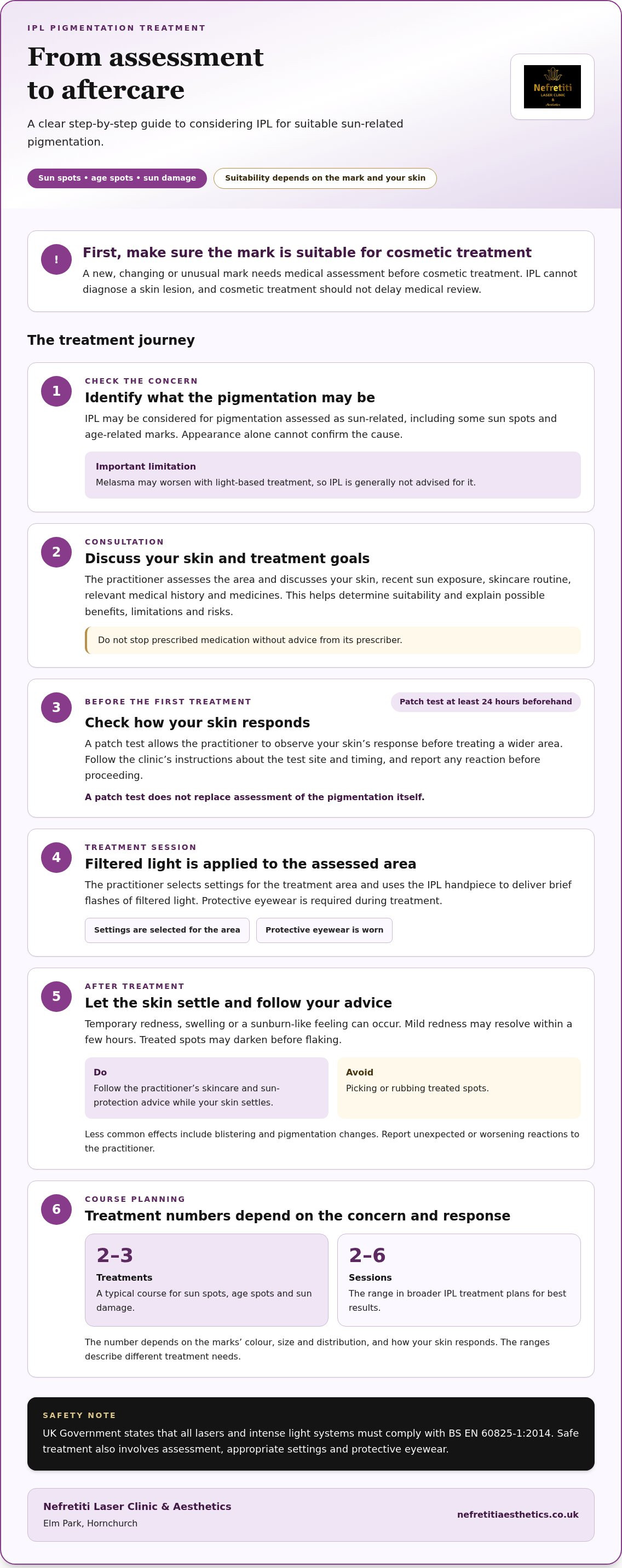
A sun spot isn’t automatically suitable for light treatment: a new or changing mark should be medically assessed before it’s treated cosmetically. IPL for sun spots in Hornchurch may suit people with pigmentation assessed as sun-related, and a course typically involves 2-3 treatments. Suitability depends on the mark and your skin.
It’s understandable to want clearer-looking skin and know what treatment involves and what improvement is realistic. IPL may help reduce the appearance of some sun-related pigmentation, but it isn’t suitable for every concern.
This guide explains which pigmentation IPL may address, who may be suitable, how sessions are spaced and what changes to expect. You’ll also find practical guidance on preparation, possible after-effects and when to seek medical assessment first.
Table of Contents
Who Is IPL Pigmentation Treatment Suitable For?
IPL may suit adults whose pigmentation has been assessed as consistent with sun spots, liver spots or age spots. These marks are often flat and darker than surrounding skin, but appearance alone can’t confirm their cause. A new, changing or unusual mark needs medical assessment before cosmetic treatment. If you’re considering IPL for sun spots in Hornchurch, first establish whether the mark is suitable for light treatment.
For sun damage, pigmentation and age spots, a typical course involves 2-3 treatments. The number depends on the marks’ colour, size, distribution and how the skin responds. IPL isn’t suitable for every pigmentation concern. Melasma, for example, may worsen with light-based treatment, so IPL is generally not advised for it.
IPL uses filtered light across a range of wavelengths; laser technology uses wavelength or wavelengths determined by its design. Cryotherapy and chemical peels work differently, so these approaches aren’t interchangeable. The right option depends on the mark and the skin being assessed. The Scottish Government notes that a phenol peel penetrates into the dermis and is intended to help with sun damage, deep wrinkles and scarring.
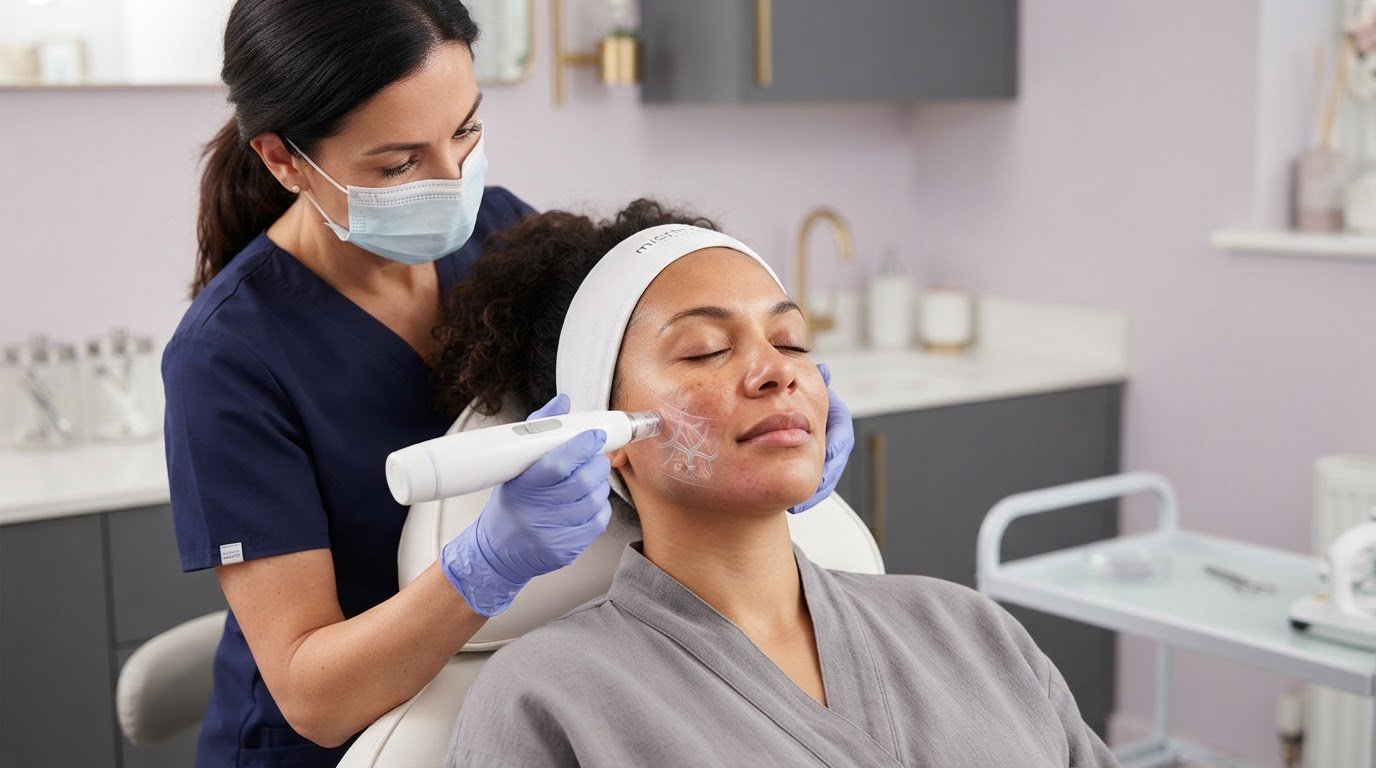
For suitable pigmentation, treatment follows a clear sequence. The practitioner examines the area and discusses your skin, sun exposure, skincare and relevant medical history. They select settings for the treatment area and apply the handpiece to your skin. Protective eyewear is required during IPL treatment. A patch test lets the practitioner assess your skin’s response before treating a wider area.
Before treatment: Discuss recent sun exposure, skincare and medicines. Don’t stop prescribed medication without advice from its prescriber.
During treatment: Wear protective eyewear while the handpiece delivers brief flashes of filtered light.
After treatment: Follow the practitioner’s skincare and sun-protection advice while the skin settles.
Temporary redness, swelling or a sunburn-like feeling can occur after IPL. Mild redness may resolve within a few hours. Less common effects include blistering and pigmentation changes. Treated spots may darken before flaking, so avoid picking or rubbing them. Report unexpected or worsening reactions to the practitioner and follow the aftercare guidance provided.
All lasers and intense light systems must comply with BS EN 60825-1:2014, according to UK Government. Compliance is one part of safe treatment, alongside assessment, appropriate settings and protective eyewear. A careful assessment also helps distinguish suitable sun-related pigmentation from marks requiring medical review, so cosmetic treatment doesn’t delay attention to a changing or unusual mark.
What skin conditions can be treated?
IPL may be considered for selected pigmentation concerns, including sun spots and some age-related marks. It isn’t suitable for every cause of uneven pigmentation. Melasma, for example, may worsen with light-based treatment, so identify the concern before choosing a procedure. A new or changing mark needs medical assessment before cosmetic treatment.
A consultation gives the practitioner time to assess the area, your skin and your treatment goals. Be ready to describe recent sun exposure, your skincare routine, relevant health history and any medicines you take. This context helps identify factors that could affect suitability and supports a discussion of possible benefits and limitations. Don’t stop prescribed medication without advice from its prescriber.
A patch test is required before the first treatment, at least 24 hours beforehand. It allows the skin’s response to be observed before a larger area is treated. Follow the clinic’s instructions about the patch-test site and timing, and report any reaction before proceeding. A patch test does not replace assessment of the pigmentation itself.
Before booking, understand what an appointment includes. A booking fee, if applied, is an administrative term, not evidence that treatment is suitable. The consultation should leave you with a clear explanation of the proposed approach, likely session plan, aftercare and possible skin reactions. A consultation can’t guarantee a particular result.
At Nefretiti Laser Clinic & Aesthetics in Elm Park, Hornchurch, the free consultation and patch test provide an opportunity to discuss the specific mark, risks and aftercare. The assessment should distinguish pigmentation from marks that need medical review. IPL can’t diagnose a skin lesion, and cosmetic treatment shouldn’t delay appropriate medical assessment.
In Hornchurch and nearby areas, IPL may be offered by aesthetic clinics. Compare the consultation process and safety information rather than choosing on location alone. Ask about the practitioner’s relevant training and experience with pigmentation, the device’s safety documentation, eye protection and how concerns are handled. UK Government states that all lasers and intense light systems must comply with BS EN 60825-1:2014.
Before booking: Note your concerns, recent sun exposure, skincare and medicines.
Before proceeding: Make sure the mark has been assessed and the treatment plan, risks and aftercare are clear.
A consultation is also an opportunity to discuss whether IPL could support a more even appearance or broader skin rejuvenation goals. The practitioner should explain what the treatment can address and where its limits lie. This measured assessment helps you make an informed choice, whether you’re considering a single sun spot or uneven pigmentation across a wider area.
Recommended number and spacing of sessions
For sun spots, age spots and sun damage, a course commonly involves 2-3 treatments. Across IPL treatment plans, the best results are usually obtained after 2-6 sessions. These ranges describe different treatment needs, rather than a fixed course for everyone. The number recommended depends on the pigmentation being treated and the skin’s response as the course progresses.
Sessions are generally spaced 2-4 weeks apart. This interval gives the skin time to respond and allows the practitioner to review changes before another appointment. Treatment dates should follow the agreed plan, rather than being brought forward simply because a mark remains visible soon after a session. The skin’s condition and any reaction since treatment are useful points to discuss at review.
The area being treated shapes the plan. A small group of distinct marks differs from pigmentation spread across a broader area. The practitioner considers the marks’ colour, size and distribution, as well as the surrounding skin and response to previous sessions. These details help determine whether to continue and what a further appointment is intended to address.
Reviewing progress is part of planning a course of treatment. Before a follow-up session, note any changes and reactions that have persisted. The practitioner can assess the treated area and decide whether the next planned session remains appropriate. If the response differs from expectations, discuss it before proceeding. Pausing or changing the plan may be more suitable than automatically repeating the same treatment.
At the first appointment: Clarify which marks and areas are included in the treatment plan.
Between sessions: Keep to the agreed 2-4-week spacing and follow the aftercare advice.
At review: Describe changes and reactions so the practitioner can assess the next step.
During the course: Revisit the treatment goal if the visible concern or your priorities change.
Sun exposure matters when planning appointments. Tell the practitioner about recent holidays, tanning or anticipated time in strong sun, and follow their advice about timing and protection. This helps them assess your skin as it is at the appointment and plan treatment appropriately. Don’t conceal a tan or recent exposure because it seems mild.
Keep your treatment goal clear. A course aimed at visible pigmentation differs from a plan focused on another skin concern. Ask which changes the practitioner will review and how they’ll assess progress between appointments. Clear expectations make it easier to discuss whether the plan is meeting your aim or another approach should be considered.
Suitable skin types
Intense pulsed light, or IPL, isn’t suitable for every skin type or complexion. A practitioner needs to assess the contrast between the pigmented mark and surrounding skin, as well as your treatment history and current skin condition. Device settings and the treatment area also matter. Suitability is assessed individually, not decided by skin colour alone.
During the assessment, describe your concerns clearly. Explain, for example, whether the mark is longstanding, whether its appearance has changed and whether you’ve recently had significant sun exposure. A new or changing mark needs medical assessment before cosmetic treatment. IPL can’t identify what a mark is, so don’t use a cosmetic appointment to delay medical assessment.
Discuss recent tanning before treatment. Tell the practitioner about holidays, sunbathing or other significant sun exposure, and follow their instructions about timing and sun protection. A tan can change the complexion being assessed, so the practitioner needs an accurate picture of your skin before selecting settings. Don’t conceal recent exposure, even if your skin doesn’t feel sore.
Melasma needs particular care. IPL is generally not advised for melasma because light-based treatment can worsen the condition. Uneven pigmentation can have different causes, and a similar-looking patch isn’t necessarily a sun spot. The practitioner should assess the pattern and history before deciding whether IPL is appropriate.
Discuss skin sensitivity, too. Explain any previous reactions to light-based procedures, current irritation and the skincare products you use. If the treatment area is already inflamed or uncomfortable, the practitioner can take that into account during assessment. A patch test gives them an opportunity to observe your skin’s response before treating a larger area.
Recovery can involve temporary changes. Redness, swelling or a sunburn-like feeling may occur after IPL; less common effects include blistering and pigmentation changes. Mild redness may settle within a few hours, while treated pigmentation spots may flake within seven days. Avoid picking or rubbing flaking skin, and follow the aftercare instructions provided.
Before assessment: Note recent sun exposure, skin sensitivity and changes in the mark.
During consultation: Discuss complexion, treatment history, skincare and any melasma concerns.
After a patch test: Report any reaction before proceeding with treatment.
During recovery: Follow aftercare guidance and seek advice about unexpected or worsening changes.
Ageing and sun damage can appear alongside other complexion concerns, so the visible mark is only one part of the assessment. The practitioner considers the surrounding skin, too. This helps establish whether IPL is a reasonable option or whether the concern needs a different assessment first.
Benefits and expected improvement from IPL
For suitable sun-related pigmentation, IPL aims to make visible marks less noticeable. It targets the appearance of selected pigmented areas rather than removing every cause of uneven skin tone. The practitioner should explain which marks are being treated and what change they’ll assess. The goal might be to soften the contrast of a flat mark on the cheek.
After treatment, pigmentation spots may darken before flaking away, which may happen within seven days. Avoid picking or scrubbing them, as this can irritate the skin. Follow the aftercare instructions and let the area settle before judging the outcome. A close-up photograph taken before treatment can help you compare the same area later in similar lighting.
Assess improvement by looking at the treated mark and surrounding skin together. Notice whether the mark’s colour appears softer, its edges remain distinct and the overall area looks more even. For a facial area, compare photographs taken from the same angle in consistent lighting. This is more useful than relying on memory alone.
IPL can form part of a skin rejuvenation plan, but the treatment objective should stay clear. A pigmentation session focuses on visible colour concerns, not on changing every aspect of skin texture or ageing. Ask which concern each session is intended to address and how progress will be reviewed before further treatment.
IPL doesn’t prevent future sun spots from appearing. Sun exposure continues to affect the skin’s appearance, so follow the practitioner’s sun-protection guidance after treatment. Keeping skincare gentle while the treated area settles can help avoid unnecessary irritation. Don’t apply strong or unfamiliar products to flaking skin without following the aftercare advice you were given.
Some people experience temporary redness, swelling or a sunburn-like feeling after IPL. Less common effects include blistering and pigmentation changes. Contact the practitioner if a reaction worsens or concerns you. Mild redness may resolve within a few hours, but timing and visible changes depend on your skin’s response. Early redness isn’t a reliable measure of the final result.
Track the same area: Compare photographs taken in similar lighting and from the same angle.
Let spots settle: Treated pigmentation may flake within seven days; don’t pick at it.
Keep the goal specific: Review the selected mark’s colour and appearance, not every skin concern.
Follow aftercare: Use the practitioner’s advice on skincare and sun protection during recovery.
A suitable result means a change in the appearance of the assessed pigmentation, not a guaranteed flawless complexion. Discuss what would count as meaningful improvement for your concern before starting. Agreeing on a measure makes it easier to review progress calmly and decide whether the plan remains appropriate.
Nefretiti Laser Clinic & Aesthetics: Laser Hair removal
Nefretiti Laser Clinic & Aesthetics offers IPL skin treatments for people considering professional assessment of sun spots and other pigmentation concerns. The free consultation and patch test provide an opportunity to discuss whether a visible mark may be suitable for IPL, the treatment approach and relevant aftercare. New or changing marks should receive medical assessment before cosmetic treatment.
Based in Elm Park, Hornchurch, the clinic welcomes clients from nearby areas, including Romford and Upminster. If IPL isn’t suitable for your pigmentation concern, the consultation can clarify the next appropriate step rather than treating an unsuitable mark.
For a calm, informed discussion about IPL skin treatment, contact Nefretiti Laser Clinic & Aesthetics or visit nefretitiaesthetics.co.uk.
Take the next step towards a considered treatment choice
Choosing IPL for sun spots in Hornchurch can start with a simple question: what change would help you feel more comfortable in your skin? Identifying your priority can keep the treatment conversation focused on your goals.
Nefretiti Laser Clinic & Aesthetics offers IPL skin treatments. A free consultation and patch test provide space to discuss whether this option aligns with what you hope to address.
Take the time you need to make a choice that feels right for you.
Frequently Asked Questions
Does it hurt?
IPL can feel warm or prickly, and the sensation varies between people and treatment areas. Facial skin, for example, may feel more sensitive than a less exposed area. Tell the practitioner if discomfort becomes difficult to tolerate so they can respond appropriately. Temporary redness or swelling can follow, and a sunburn-like feeling is possible. Follow the aftercare guidance rather than rubbing or picking treated skin.
How many sessions, and what does it cost?
A course for sun spots commonly involves 2-3 treatments, while IPL courses overall can range from 2-6 sessions. The spacing and course depend on the concern and skin response. IPL treatment costs depend on factors such as the area being treated and the plan discussed. The price is provided after a quote request. Ask for the proposed course and its cost together, so you can consider the full plan.
What causes pigmentation, and how does IPL help?
Pigmentation describes areas where skin colour appears darker or uneven. Sun exposure can contribute to visible sun spots, while other concerns, such as melasma, have different patterns and treatment considerations. IPL directs filtered light towards selected pigmentation, and pigment in the skin absorbs some of that light energy. This may help reduce the appearance of suitable marks. Correctly identifying the concern matters because IPL isn’t appropriate for every kind of pigmentation.
Do I need to take special precautions before and after treatment?
Yes. Tell the practitioner about recent tanning, holidays, skincare products and prescribed medicines before treatment. Don’t stop medication without advice from the prescriber. You’ll wear protective eyewear during the procedure. Afterwards, follow the specific skincare and sun-protection instructions you’re given, and avoid picking at flaking areas. If a reaction worsens or concerns you, contact the practitioner for advice instead of trying to treat it yourself.
How does IPL work for pigmentation and sun damage?
IPL uses filtered light across a range of wavelengths. Pigment in a suitable sun spot absorbs some of this light energy, which can prompt the spot to darken and later flake. This process targets the appearance of selected marks; it doesn’t prevent new sun damage or treat every cause of uneven colour. A practitioner assesses your skin first to decide whether the mark and surrounding complexion are appropriate for this approach.
How does the treatment work?
The practitioner first assesses the treatment area and confirms the plan. You wear protective eyewear while the IPL handpiece delivers brief flashes of filtered light to the selected skin. Treatment focuses on the agreed area rather than automatically treating every mark. Afterwards, follow the aftercare instructions and let your skin settle. Contact the practitioner if you notice an unexpected reaction, such as worsening swelling or blistering.
What is IPL treatment for sun spots, and how does it work?
IPL treatment for sun spots is a light-based cosmetic procedure for suitable pigmentation. Unlike a single-wavelength laser, IPL uses filtered light across a range of wavelengths. The practitioner applies it to assessed marks, where pigment absorbs light energy. Treated spots can darken before flaking, so changes may not appear immediately. A new or changing mark should be medically assessed before cosmetic treatment, rather than assumed to be a sun spot.
How much does IPL for sun spots cost in Hornchurch?
The cost of IPL for sun spots in Hornchurch depends on the treatment area and plan recommended after assessment. A single small mark and a broader area of pigmentation involve different considerations, so one figure wouldn’t apply to every case. Request a quote that clearly relates to your assessed concern and proposed course. This helps you understand the cost before deciding whether to proceed.


Comments