


Laser Tattoo Removal Pain: What It Feels Like and How to Ease It
Updated: 2 days ago
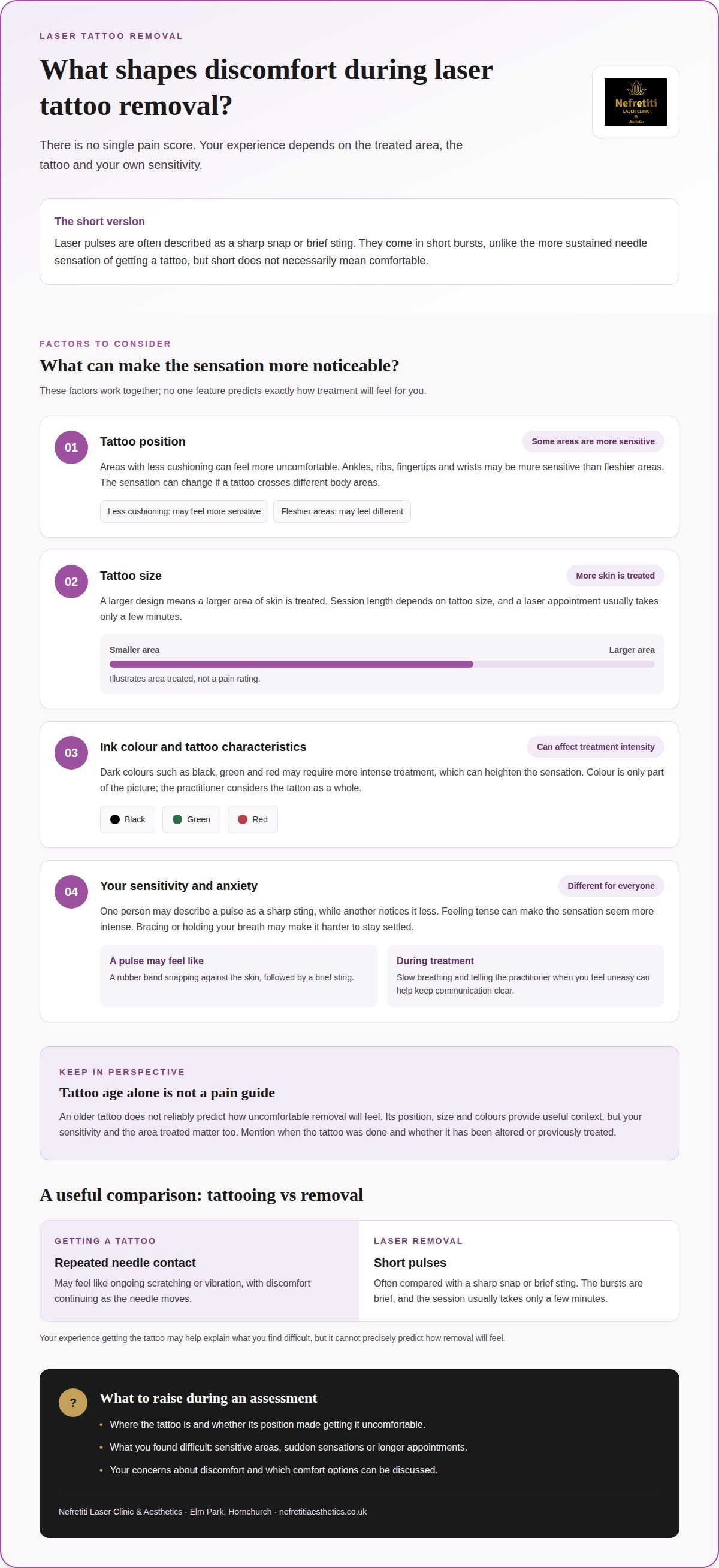
The laser tattoo removal pain level varies from person to person. For some, removal feels sharper than getting tattooed. The sensation is brief, but how noticeable it feels depends on your skin, the tattoo’s position and your sensitivity.
Looking for laser tattoo removal in Hornchurch? See our Tattoo Removal treatment page for prices and booking.
It’s understandable to feel uncertain before choosing treatment, especially if you’re weighing discomfort against a personal reason for fading or removing a design. Pain isn’t the only part of the decision: you may also want a realistic picture of the appointment, recovery and commitment involved.
This guide gives a balanced overview of what to expect. It explains how removal compares with getting tattooed, which factors can affect discomfort and what comfort options you can discuss. You’ll also find context on session planning and questions to raise during an assessment, so you can decide whether treatment feels right for you.
Rather than relying on someone else’s account, use this information to identify what matters to you and prepare for a considered conversation with a practitioner.
Table of Contents
How Does the Pain Compare to Getting the Tattoo?
There isn’t one answer that applies to everyone: tattooing and laser removal create different sensations. Tattooing involves repeated needle contact as the artist works across the skin. Laser removal delivers pulses instead. Some people find those pulses sharper than tattooing, while others find the short bursts easier to manage than a longer tattoo appointment.
During removal, each pulse is often compared with a rubber band snapping against the skin. It can feel sudden and sting briefly. Tattooing may feel more like ongoing scratching or vibration, with discomfort continuing as the needle moves. Your experience depends on your sensitivity and the treated area, so another person’s comparison can’t predict yours exactly.
Time is another key difference. A laser session usually takes only a few minutes, depending on the tattoo’s size, while getting a tattoo can take much longer. A short appointment doesn’t mean every pulse is comfortable. It means the sensation comes in brief bursts rather than continuing while an artist fills or outlines a design.
Location can complicate the comparison. A tattoo on a fleshy part of the arm may feel different during removal from one over the ribs, ankle or wrist. Skin close to bone, or an area with more nerve endings, can feel more sensitive. If your original tattoo was difficult because of its placement, mention that during an assessment.
Removal also involves a different process after the laser pulses. The laser breaks pigment into smaller particles, which the body absorbs and metabolises over time. Skin colour changes can occur during recovery. According to the NHS, hyperpigmentation after laser tattoo removal usually resolves within 3-6 months.
How much does laser tattoo removal cost per session in the UK? The price depends on the case and is provided after a quote request. Tattoo size, ink colours and the treatment required affect the quote.
Rather than assuming one procedure is always more painful, compare the qualities that matter to you: sustained needle sensation versus short, sharper pulses; a longer appointment versus a brief one; and the sensitivity of the tattoo’s location. For example, someone who found a long tattoo appointment uncomfortable might prefer brief pulses, while someone sensitive to sudden sensations may find those pulses challenging.
If pain is influencing your decision, describe what you experienced during tattooing and where the design sits. That context can make a discussion about removal more relevant to you. Ask about the likely sensation and comfort options before treatment, so you can make an informed choice without relying on someone else’s pain comparison.
Does Tattoo Removal Hurt?
Yes, removal can hurt, although the sensation varies between people. Your laser tattoo removal pain level depends on personal sensitivity and the tattoo’s features.
Tattoo Age and Discomfort
A tattoo’s age alone doesn’t reliably predict how uncomfortable treatment will feel. Fading over time doesn’t reveal how sensitive your skin will be during a session. An older design on the wrist, for example, may feel different from a newer one on the upper arm. The tattoo’s position, size and colours provide useful context, but age alone cannot give you a personal pain score.
Age can still help describe the tattoo’s history during an assessment. Mention when it was done and whether it has been altered or previously treated. These details help build a picture of the design, while your sensitivity and the area treated remain important to the discussion.
Factors Affecting Pain
Discomfort reflects several factors, rather than one feature in isolation. A larger design means more skin is treated, while areas with less cushioning may feel more sensitive. Ankles, ribs, fingertips and wrists can be more uncomfortable than fleshier areas. If a tattoo crosses different body areas, the sensation may change as treatment moves across it.
Ink colour also matters. Dark colours such as black, green and red may require more intense treatment, which can heighten the sensation. This doesn’t mean every tattoo with those colours feels the same. The practitioner considers the tattoo as a whole, rather than predicting discomfort from colour alone.
Your laser tattoo removal pain level may also be influenced by anxiety. Feeling tense before treatment can make the sensation seem more intense. For example, bracing your arm or holding your breath may make it harder to stay settled. Slow breathing and telling the practitioner when you feel uneasy can keep communication clear during the session.
Pain tolerance differs from person to person. One person may describe a pulse as a sharp sting, while another notices it less. Your experience getting the tattoo can help explain what you find difficult, but it can’t precisely predict removal. Consider whether sensitive areas, sudden sensations or longer appointments are your main concern.
No single factor determines discomfort for everyone. A small design on a fleshy area presents different considerations from a larger tattoo over the ribs. Looking at size, colours and position together gives a more useful starting point. Adding your own concerns makes a discussion about comfort more specific than relying on a general pain rating.
If you’re concerned, identify the part of treatment you expect to find hardest. You may, for instance, be more worried about a tattoo near your ankle than one on your arm. Sharing that concern beforehand helps the practitioner understand what matters to you and discuss suitable ways to manage the appointment.
How many removal sessions will it take?
Removal usually involves several appointments, with healing time between them. Anxiety, session length and the way the practitioner manages treatment can all shape the experience.
Six to eight sessions is a reported average, but the number needed varies with the tattoo and its response. Complete removal usually takes multiple sessions over several months. Appointments are generally spaced a few weeks apart, allowing the skin to heal between treatments.
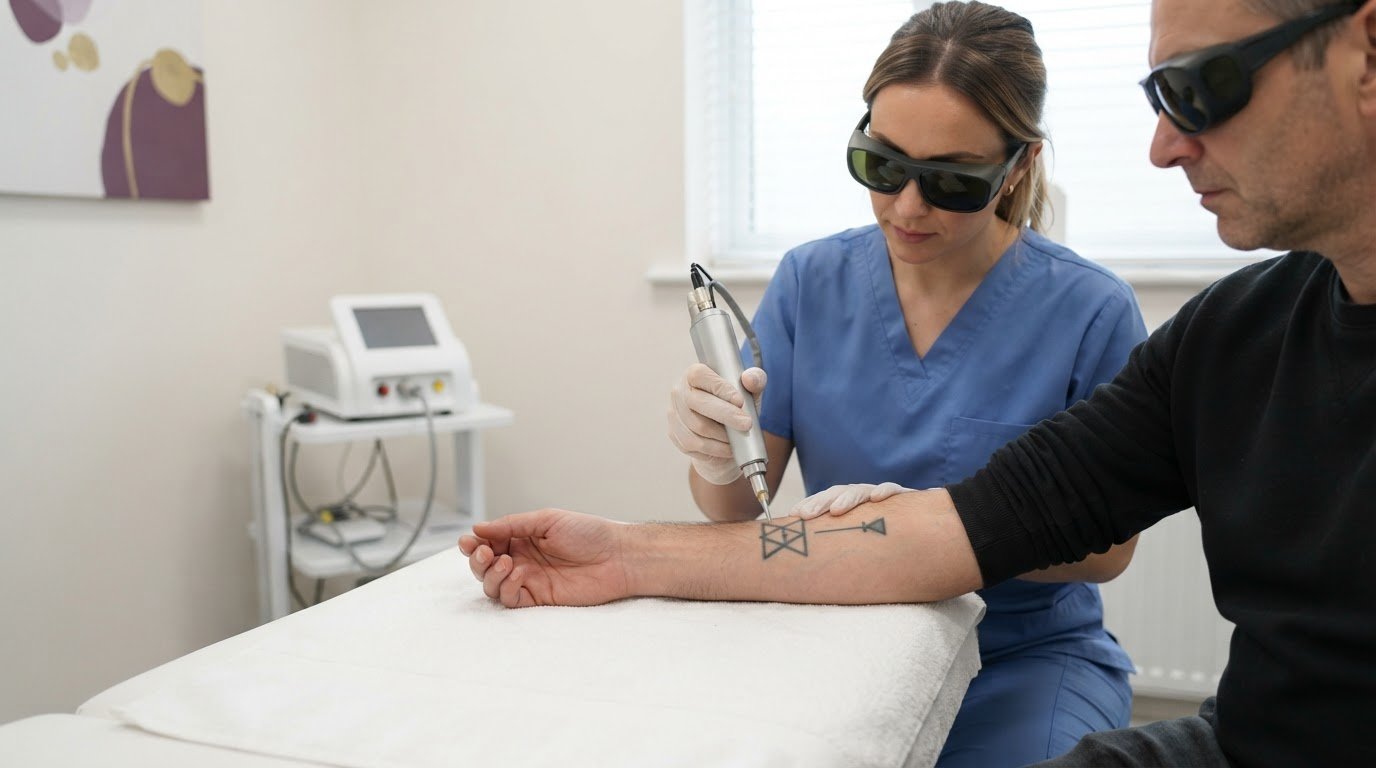
A session typically lasts 10-15 minutes, although the tattoo’s size affects the time required. The laser is applied in brief pulses, so sensations come in short bursts rather than one continuous feeling. You may notice stinging, a snapping sensation or a sunburn-like feeling during treatment.
How long does pain last after a laser tattoo removal session? The area may feel like sunburn after treatment, but there’s no single duration that applies to everyone. The treated area and your skin’s response influence how long discomfort remains.
Managing anxiety can make the appointment feel more manageable. Worry can amplify the sensation, so try slow, deep breathing before and during treatment. You can also tell the practitioner if you feel tense or need a pause. Knowing that a session usually lasts 10-15 minutes can help you prepare for the appointment without assuming every tattoo takes the same time.
The treatment provider’s skill matters because safe, considered treatment depends on assessing the tattoo and skin, then explaining what to expect. A useful discussion covers the practitioner’s laser training, the assessment process, eye protection and aftercare. Clear communication also helps you raise concerns about sensitivity or anxiety before the laser is used.
What UK qualifications or safety standards should a laser tattoo removal clinic have? Ask about the practitioner’s laser-specific training and how they assess the skin and tattoo before treatment. A clear explanation of eye protection, treatment risks and aftercare helps you understand the safety measures involved.
What are the common side effects and risks of laser tattoo removal? Skin colour changes can occur, and treatment can damage skin, particularly if it is weakened by sun exposure. Avoiding excess sun before, during and after treatment helps reduce that concern.
Aftercare and the gap between appointments matter as much as the session itself. Laser pulses break pigment into smaller particles, which the body absorbs and metabolises over time. Allowing the skin to heal between appointments supports the staged process; rushing sessions doesn’t replace that recovery time.
If you feel anxious, mention it before treatment begins. A calm discussion about sensations, breaks and breathing can help you approach each session with a clearer idea of what to expect.
Numbing creams and local anaesthetic
Numbing options may help reduce discomfort during laser treatment. Topical creams and local anaesthetic work differently, so their suitability and use should be discussed before the appointment.
Topical Numbing Creams
A topical numbing cream is applied to the skin before treatment to reduce pain signals from the treated area. Numbing creams can block sodium channels, preventing nerves from sending pain signals to the brain. A dermatologist may use cream to minimise or prevent discomfort. Its effect and suitability depend on the treatment area and individual circumstances.
Tell the practitioner about any cream you’ve used or plan to use. They can explain whether it’s appropriate and how to use it safely. Don’t assume that applying more cream will improve comfort. The product and instructions matter, particularly before laser pulses are directed at the skin.
Local Anaesthetic
Local anaesthetic is an injectable option that numbs a specific area. A dermatologist may inject it to minimise or prevent pain during tattoo removal. Unlike a cream applied to the skin, an injection delivers anaesthetic beneath its surface. Whether it’s suitable depends on the area being treated and the treatment plan.
Discuss this option during the assessment, especially if the tattoo covers a sensitive area or you’re worried about discomfort. The practitioner can explain what the injection involves and whether it fits your circumstances. An injection isn’t automatically needed for every tattoo or session.
Cooling is another possible comfort measure, distinct from numbing creams and injections. It involves applying cold to the skin, whereas cream is placed on the treatment area and local anaesthetic is injected. These approaches aren’t interchangeable. Discussing them beforehand helps clarify which options are appropriate for your treatment.
Comfort needs can vary between sessions. A tattoo on a sensitive area, for example, may feel more challenging than a small design elsewhere. Tell the practitioner if your previous appointment felt uncomfortable, or if you’re anxious about the next one. This gives them useful context when discussing numbing options and planning treatment.
Don’t use a numbing cream or arrange an injection without discussing it first. The type of product, how it is applied and the treatment area all matter. Follow the practitioner’s instructions, and mention any concerns before the laser is used. Clear communication helps you understand the available options without expecting any method to remove every sensation.
Ask for a clear explanation of the chosen comfort approach before treatment begins. Knowing whether the plan involves a topical cream, local anaesthetic or cooling can help you prepare for the appointment and understand what to expect.
How laser tattoo removal pain feels
People often describe each laser pulse as a sharp snap, like a rubber band against the skin. Others compare the after-feeling to sunburn. These descriptions give a useful sense of the sensation, but they don’t predict exactly how it will feel for you. The tattoo’s position and your sensitivity both shape the experience.
The sensation comes in short bursts as the laser delivers pulses to the tattoo pigment. That can feel different from continuous scratching or vibration. You might, for example, notice a quick sting with each pulse, followed by a short pause as the practitioner moves across the design. A small tattoo may be treated quickly, while a larger area takes longer.
There’s a reason the feeling can seem sharp. Laser pulses penetrate the epidermis and break tattoo pigment into smaller particles. The body then absorbs and metabolises those particles over time. The pulse itself is brief, but the treated skin can feel warm or tender afterwards, much like a mild sunburn.
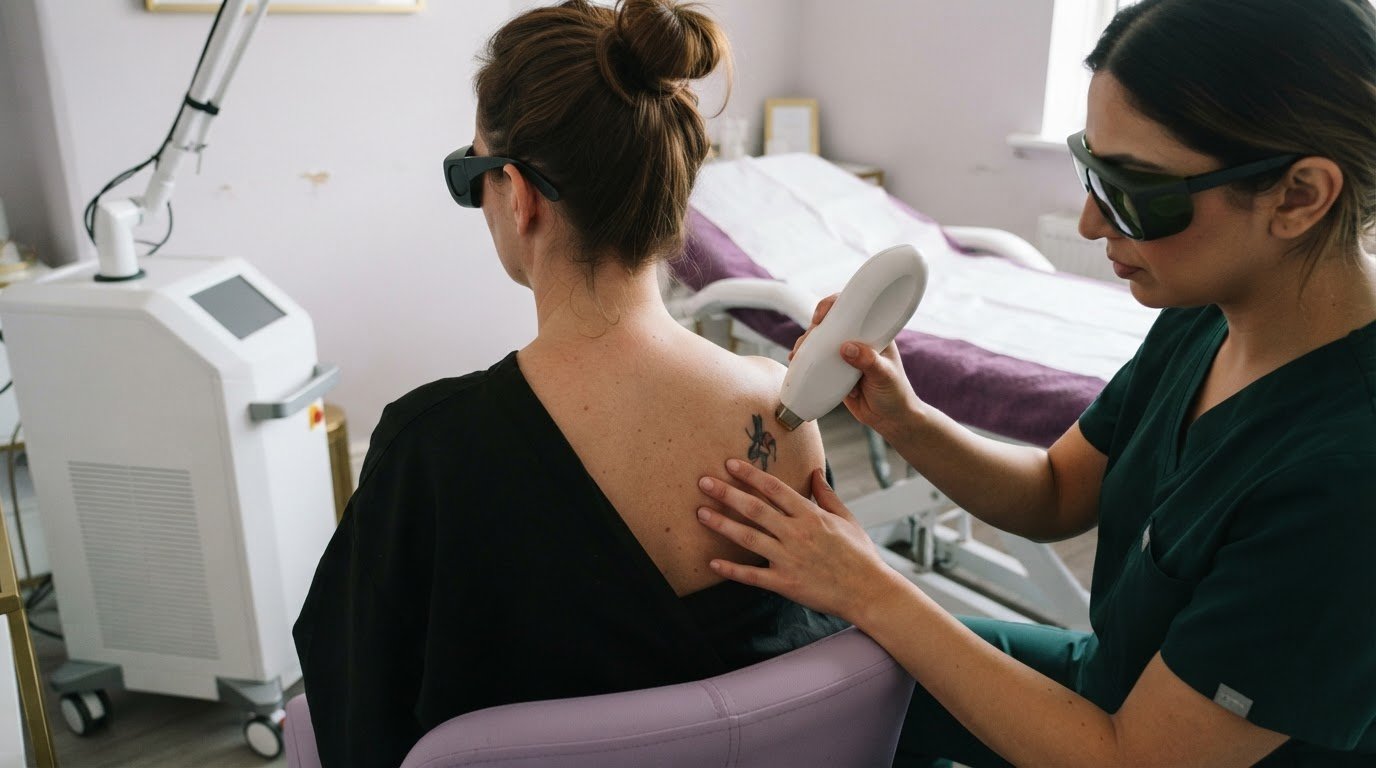
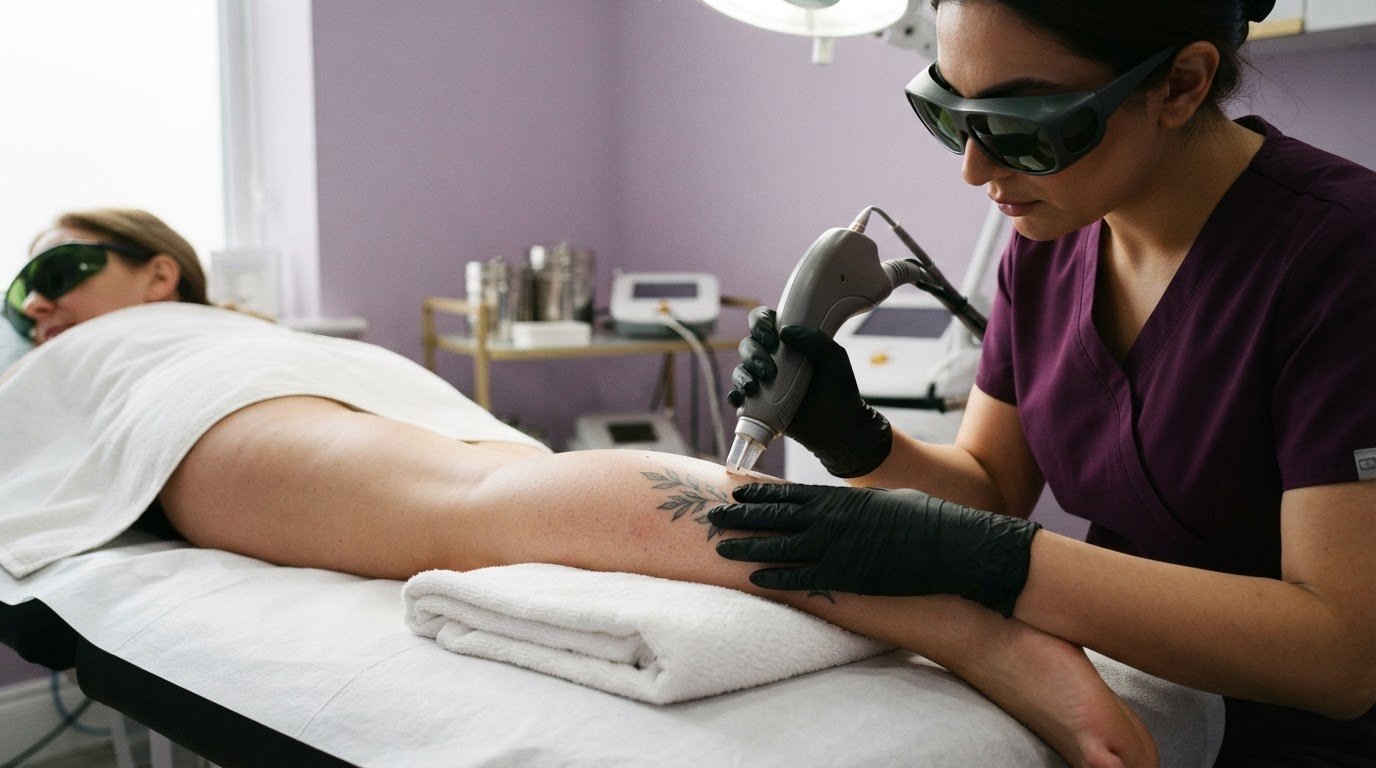
Where the tattoo sits can change the quality of the sensation. Skin over the ribs or ankles has less cushioning than fleshier areas, so pulses may feel more intense there. A tattoo that crosses from an upper arm towards the elbow may feel different from one confined to a fleshy part of the arm. Even within one design, the sensation can vary as treatment moves across the skin.
Your breathing and muscle tension can also affect how comfortable you feel during a session. If you hold your breath or brace as a pulse approaches, discomfort may feel harder to manage. Try breathing slowly and steadily while the practitioner works. If the sensation becomes difficult, say so promptly rather than staying silent or tightening your muscles.
After the laser stops, the feeling may shift from sharp pulses to warmth or tenderness. A sunburn-like sensation is a common description, but intensity and duration differ between people. Notice how your skin responds, and follow the aftercare instructions provided for your session. Avoid rubbing or picking at treated skin, as this can aggravate it.
The clearest takeaway is that treatment usually feels like brief, repeated snaps, not one continuous pain. The tattoo’s location, size and sensitivity influence how those snaps feel. Describing your concerns before treatment helps set expectations and gives the practitioner an opportunity to discuss comfort measures suited to your circumstances.
Nefretiti Laser Clinic & Aesthetics: Laser Hair removal
Nefretiti Laser Clinic & Aesthetics offers laser tattoo removal for people considering fading or removing unwanted ink. If pain is your main concern, a consultation gives you space to discuss the tattoo’s position, size and colours, what treatment may feel like and which comfort options are suitable.
Understanding the process beforehand can help you make a considered choice. The practitioner can explain the treatment plan, likely intervals between sessions and aftercare, then answer questions about your skin and concerns. Every tattoo and treatment response differs, so expectations should be discussed individually.
Based in Elm Park, Hornchurch, the clinic welcomes people from nearby areas, including Romford and Upminster. Contact Nefretiti Laser Clinic & Aesthetics to discuss laser tattoo removal and arrange a consultation.
Take the next step with confidence
Your laser tattoo removal pain level is personal, so the most useful next step is a conversation about your tattoo and concerns. Use that discussion to decide whether treatment feels right for you, raise questions about comfort and understand what the process involves before making a commitment.
You don’t need to have every decision made beforehand. Bring your questions, explain what matters to you and take the time you need to consider your options. A thoughtful, individual assessment can help you feel more informed about proceeding.
If you’re considering tattoo removal, Nefretiti Laser Clinic & Aesthetics can discuss your treatment goals and concerns during a consultation. Choose a time to start that conversation.
A considered first step can make the path ahead feel clearer.
Frequently Asked Questions
What Does It Feel Like?
People commonly describe the sensation as quick, sharp snaps rather than a continuous ache. The exact feeling varies, so one person’s account may not match yours. A pulse over a fleshy area, for example, may feel different from one over a bony area. If you’re unsure what to expect, describe your concerns before treatment and ask the practitioner to explain how the sensation may change across your tattoo.
Is the Pain Worth It?
Whether the discomfort feels worthwhile depends on your reasons for wanting the tattoo faded or removed. Consider how important that change is to you, alongside the commitment to multiple appointments and time for healing. You don’t need to decide during a consultation. Discuss your goal, what treatment can involve and any concerns, then take time to consider whether the process suits you.
How painful is laser tattoo removal compared with getting a tattoo?
There isn’t a reliable universal ranking: some people find removal sharper, while others find tattooing more uncomfortable. Tattooing can involve prolonged needle work, whereas removal produces brief laser pulses. Your experience also depends on the tattoo’s location and your sensitivity. If your original tattoo appointment was difficult, mention what made it uncomfortable; that detail can guide a practical discussion about your concerns.
What does laser tattoo removal pain feel like?
The sensation is often compared with a rubber-band snap or a brief, sunburn-like sting. These comparisons describe common experiences, not a precise prediction for every person. You may notice the feeling change as the laser moves across different parts of the design. If a particular spot feels unexpectedly intense, tell the practitioner so they know how you’re responding during the session.
How much does laser tattoo removal hurt on different body areas?
Areas with less padding or more nerve endings, such as ankles, fingers and ribs, may feel more sensitive than fleshier areas. A design that crosses the ribs and upper abdomen, for example, may feel different from one confined to the upper arm. Sensitivity also varies between people. Mention the tattoo’s position and any areas you’re especially concerned about before treatment begins.
What affects pain during laser tattoo removal, such as tattoo size and ink colour?
Size, position, ink colour and personal sensitivity can all shape the experience. A larger design requires more treatment across the skin than a small one. Ink colours respond differently to laser treatment; lighter colours can be harder to remove than dark colours, but that doesn’t mean they always hurt more. The practitioner assesses the tattoo’s features to discuss what may influence your treatment.
Can numbing cream or other pain relief reduce laser tattoo removal pain?
Topical numbing cream may reduce discomfort, and a dermatologist may use local anaesthetic for tattoo removal. These options aren’t automatically suitable for every person or tattoo. Discuss them before your appointment rather than applying a product or arranging an injection yourself. Explain any concern about sensitivity, and ask which comfort measures are appropriate for the area being treated.
What happens during a laser tattoo removal session?
The laser delivers pulses to the tattoo, breaking pigment into smaller particles that the body absorbs and metabolises over time. The practitioner works across the design, so the sensation may shift between areas. Before treatment, discuss your tattoo and any concerns about comfort. Afterwards, follow the aftercare advice and allow the skin to heal before another appointment is considered.
Comments