


Microneedling for Sun Damage in Elm Park
Microneedling may improve mild sun-related pigmentation, but it cannot guarantee the removal of sun spots. For microneedling for sun damage in Elm Park, have melasma or hyperpigmentation professionally assessed first, as inflammation and sun exposure can affect pigmentation. A new, changing, irregular or bleeding spot needs medical assessment before cosmetic treatment.
If you’re concerned about uneven skin tone, it’s understandable to want a treatment that is considered as carefully as it is delivered. This guide explains how microneedling works, what it may improve and what recovery can involve, helping you make an informed decision.
You’ll also learn why pigment concerns such as melasma need individual assessment, what a practitioner considers before treatment, and how aftercare supports healing. Results vary, and the right approach depends on the cause of the concern and your skin’s condition.
Table of Contents
Can microneedling help with sun damage?
Microneedling may improve mild sun-related pigmentation, but it doesn’t reliably remove every sun spot. Identifying the type of mark matters, particularly when melasma or changing spots are involved.
Mild Sun-Related Pigmentation
Microneedling creates tiny channels in the skin, encouraging renewal that may gradually improve mild uneven pigmentation. It isn’t a guaranteed way to clear sun spots, so the type of mark matters. The UK Government describes microneedling as intended to address scarring, marks and lesions on the face and body. A practitioner should assess a mark before treatment.
Melasma needs particular care because inflammation and sun exposure can affect pigmentation. If you have persistent patches or a history of melasma, discuss this before treatment. Assessment should distinguish mild sun-related marks from other pigment concerns, rather than treating every brown spot as the same.
Causes and Types of Sun Damage
Pigmentation develops when the skin produces excess melanin, the pigment responsible for skin colour. Years of sun exposure, hormonal changes and old acne marks can all contribute. Sun damage, also called photoaging, builds over time and may appear as uneven tone, dullness, rough texture, fine lines, visible dryness or reduced firmness.
These changes commonly appear on exposed areas, including the face, neck, chest and hands. A flat, stable sun mark differs from a new, irregular or changing spot. A new, changing, irregular or bleeding pigmented spot needs medical assessment before cosmetic treatment.
Treatment Options for Stubborn Pigment
Microneedling may suit mild pigment concerns alongside texture changes, while IPL, chemical peels and laser treatments work differently. IPL uses light, not a laser, and a chemical peel works at the skin’s surface. A typical PicoSure laser course is three sessions spaced monthly.
PicoSure is a picosecond laser option for stubborn pigment, but suitability depends on professional assessment. Chemical peel courses may involve three to six treatments spaced fortnightly. These options aren’t interchangeable, and melasma calls for particular caution because inflammation or sun exposure can affect pigmentation.
Sun-Damaged Skin Concerns
Microneedling may gradually improve the appearance of mild uneven tone, rough texture and fine lines in suitable candidates. It may also address marks and lesions, but it won’t identify the cause of a spot or ensure its removal. A practitioner should assess the mark and surrounding skin before recommending treatment.
If you’re considering microneedling for sun damage in Elm Park, use a consultation to discuss your skin concerns, the history of the mark and your treatment goals. A professional assessment can help determine whether microneedling is suitable. A new or changing spot needs medical assessment before cosmetic treatment.
For persistent pigmentation, the next step is matching treatment to the mark, not simply choosing a device. Assessment should consider the cause, depth and pattern of pigmentation, skin condition and history of melasma. If skin has recently been sunburnt or is actively irritated, treatment may need to wait until it settles. Consistent sun protection also matters, as further exposure can contribute to uneven tone returning.
Biostimulation and collagen production
Microneedling works by creating controlled, tiny channels in the skin and prompting a repair response. This process can support collagen production and skin-cell renewal.
Collagen Induction Process
During microneedling, a device creates tiny channels across the treatment area. The skin responds by activating natural repair processes, including collagen production. This is known as collagen induction. Unlike treatments that target pigment directly, microneedling focuses on the skin’s renewal response rather than selectively removing a dark mark.
As healing progresses, collagen formation may gradually change the appearance of surface texture and fine lines. This happens over time, not instantly during an appointment. For example, a practitioner may consider whether uneven facial texture or visible fine lines are among your goals, then tailor the approach to the area and your skin’s condition.
Depth and technique matter because the aim is controlled treatment, not injury for its own sake. The device and settings should suit the treatment area and your skin. A professional assessment helps establish the intended outcome and whether microneedling is appropriate for your concern.
Collagen and Elastin Production
Collagen and elastin are different components of the skin’s supporting structure. Collagen helps provide strength and structure, while elastin contributes flexibility. Microneedling is associated with stimulating collagen production; it shouldn’t be described as a guaranteed way to restore either protein or reverse sun-related changes.
Sun exposure can contribute to visible changes such as roughness and fine lines. Microneedling’s role is to encourage a renewal response, which may gradually improve the appearance of texture. It doesn’t prevent further sun damage, so ongoing sun protection remains important during treatment and afterwards.
Radiofrequency microneedling adds radiofrequency energy to needle-based treatment to support deeper collagen tightening. That distinction is useful when discussing options, but it doesn’t mean this approach suits every concern. The treatment area, skin condition and goals all affect the decision. A practitioner should explain whether the intended focus is surface texture, firmness or both.
Biostimulation is a process, not an immediate result. Collagen production and skin-cell renewal develop as the skin responds and heals. If you’re considering treatment for facial rejuvenation, discuss the changes you hope to address and the settings planned for your skin. This keeps expectations grounded in how the treatment works, rather than assuming it will remove every sign of sun exposure.
Expected redness, bleeding and recovery
Microneedling recovery can involve visible redness, pinpoint bleeding and temporary sensitivity. The skin’s response changes over the first several days.
Redness and Bleeding
On day one, redness and pinpoint bleeding may appear across the treated area, sometimes alongside mild swelling or sensitivity. During days two and three, pinkness may remain, while dryness or light flaking can develop on days four and five. These reactions reflect the skin’s response to treatment, but their intensity varies with skin condition and treatment depth.
Temporary redness, sensitivity, dryness or flaking can last several days. Deeper treatment may affect recovery, so plan for downtime rather than booking just before an important event. Follow the practitioner’s aftercare instructions, and avoid harsh exfoliation or skincare actives that haven’t been approved while your skin heals.
Inflammation is especially relevant for melasma and other pigmentation concerns. Sun exposure and irritation can affect pigment conditions, so avoid treating recently sunburnt or actively irritated skin. If redness or sensitivity worsens instead of settling, seek medical advice rather than adding products or exfoliating.
Recovery and Improvement Timeline
Most visible healing is typically complete by day six. Skin may feel fresher around seven to ten days after treatment, but visible changes to tone or texture take longer. Improvement in skin tone and texture is commonly seen within one to two months. This reflects gradual skin renewal, not an instant change to collagen or elastin.
There is no universal session count for sun damage. For more noticeable concerns, a practitioner may recommend three to six treatments spaced several weeks apart, adjusting the plan according to your skin’s response and goals. The number of sessions depends on the area, the concerns being addressed and how your skin recovers between appointments.
Possible side effects include redness, pinpoint bleeding, mild swelling, sensitivity, dryness and flaking. Pigmentation can be a particular concern when skin is inflamed or exposed to sun, especially for people with melasma. Discuss your pigment history before treatment and follow aftercare guidance while your skin heals.
Use broad-spectrum sunscreen with SPF 30 or higher every day throughout the year. This helps limit further sun exposure while your skin recovers and supports a consistent aftercare routine. Avoid harsh exfoliation and unapproved active skincare products during healing; resume products only in line with the practitioner’s instructions. Contact a medical professional if you have concerns about an unexpected reaction.
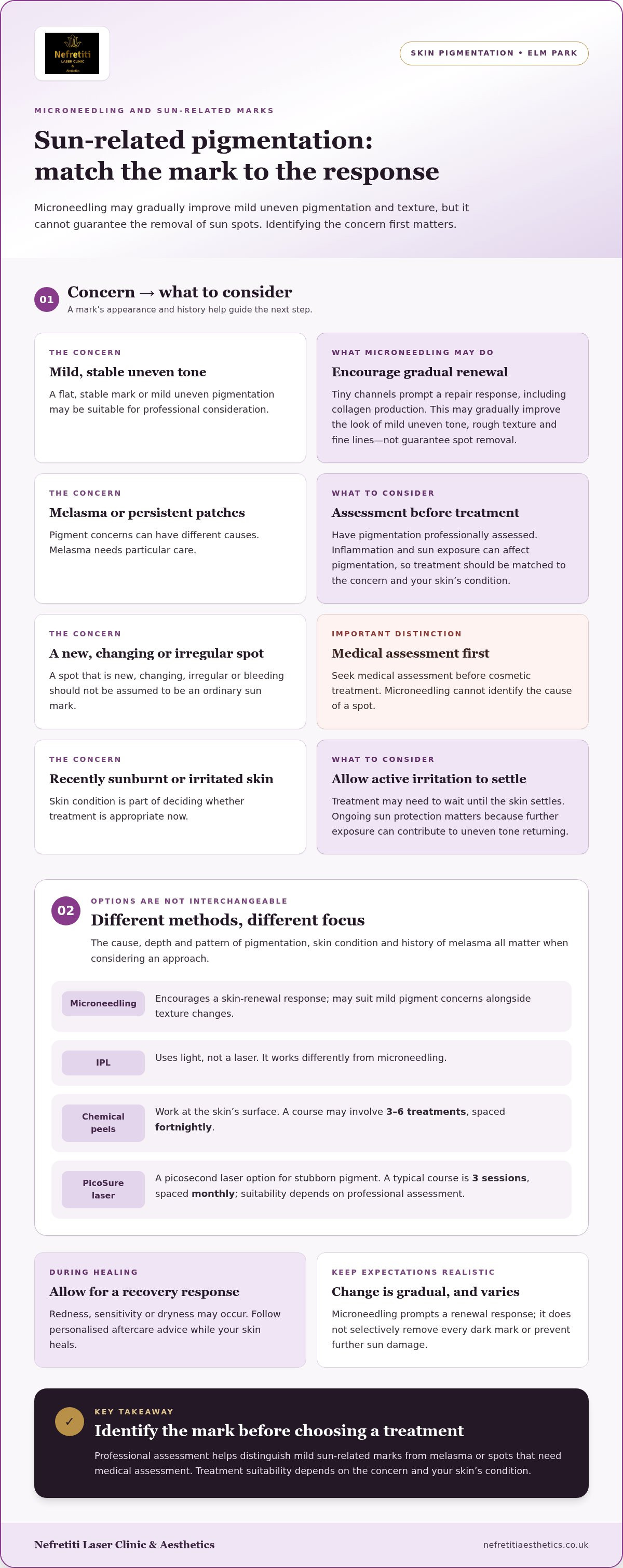
How microneedling may improve visible sun damage
Microneedling targets visible changes by creating controlled channels that prompt skin renewal. Assessment may cover uneven tone, rough texture and fine lines.
Texture and Tone Changes
For example, someone noticing roughness across their cheeks might discuss whether texture is a treatment goal. Professional microneedling may gradually improve the appearance of texture, fine lines and uneven-looking skin tone in suitable candidates. The needles create tiny channels and trigger a repair response rather than selectively removing pigment from one mark.
Collagen and elastin contribute to skin structure and flexibility, and microneedling stimulates collagen production. This process takes place as skin renews; it doesn’t mean every wrinkle or area of laxity will change. A practitioner should relate the plan to your specific facial areas and concerns, rather than promise uniform results across the face.
Dark Spot Improvement
For mild sun-related pigmentation, microneedling may contribute to a more even-looking appearance as the skin renews. It isn’t a guaranteed way to remove sun spots, and darker marks can have different causes. A practitioner should identify the pigment concern before treatment, especially if patches may indicate melasma or another ongoing pigmentation condition.
Inflammation and sun exposure can affect pigment conditions. Treatment planning should therefore account for a history of melasma, recent sunburn and active irritation. For instance, a practitioner may postpone treatment if skin is burnt or irritated, rather than add inflammation to an unsettled area.
Microneedling addresses appearance, not diagnosis. A new, changing, irregular or bleeding spot needs medical assessment before cosmetic treatment. A GP or dermatologist can assess suspicious marks; don’t use microneedling to treat an unidentified spot. The practitioner should also distinguish flat pigmentation from other lesions before deciding whether cosmetic treatment is suitable.
For visible fine lines and texture, the intended effect comes from gradual renewal and collagen stimulation. Microneedling isn’t a substitute for assessing a suspicious lesion, and it doesn’t prevent further sun damage. Maintaining broad-spectrum sun protection is a practical step, since continued exposure can contribute to uneven tone and other photoageing changes.
To set realistic treatment goals, note which changes concern you most, such as cheek pigmentation, roughness or fine lines around the eyes. Share when the marks appeared and whether they have changed. These details help guide a focused assessment and determine whether microneedling suits the concern or whether medical evaluation is needed first.
Professional consultation and tailored settings
A consultation helps establish whether microneedling suits your skin and concerns. Assessment should cover sun exposure, current skin condition, treatment goals and factors that may affect suitability.
Consultation and Assessment
Describe the changes you want to address, such as uneven tone, fine lines or texture. Share your history of sun exposure, previous treatments and pigment concerns, including melasma. The practitioner should assess the treatment area and discuss whether your skin is ready for treatment or needs medical assessment first.
Settings should reflect the treatment area, skin condition and intended outcome. Needle depth and technique influence how channels are created, so the plan should be explained before treatment. Ask how the approach supports healing and collagen production, and what aftercare is right for your skin.
Before your consultation, note when pigment marks appeared and whether they have changed. Mention recent sunburn, irritation, active acne, rash, infection or an open wound in the treatment area, as these can affect suitability. Bring details of your current skincare products and previous procedures to help the practitioner understand your skin’s condition.
Use the appointment to discuss expected recovery, possible side effects and proposed treatment intervals. Ask how the practitioner will respond if your skin becomes irritated and what signs warrant medical advice. Clear answers help you understand the plan before deciding whether to proceed.
Practitioner Qualifications and Clinic Safety
In England, ask the practitioner about relevant microneedling training, practical experience and insurance. Request a clear explanation of the device, hygiene and infection-control procedures, and how treatment is adapted to your skin. A professional should discuss risks, aftercare and referral needs, rather than promise results.
Make sure the consultation allows time for questions and that you receive clear information before agreeing to treatment. For example, ask what happens if the assessment finds active irritation or a mark that needs medical review. You should know who will perform the procedure and how to raise concerns during healing.
Don’t proceed over recently sunburnt or actively irritated skin; treatment can wait until it has settled. Discuss active acne, rash, infection or an open wound in the treatment area before microneedling. A new, changing, irregular or bleeding pigmented spot needs medical assessment before cosmetic treatment. These checks help distinguish a cosmetic concern from one requiring medical attention.
Use the consultation to weigh potential benefits against downtime and your skin’s healing needs. Treatment settings should be individualised, not chosen solely because someone wants deeper channels or faster collagen production. The practitioner should explain the reasoning, aftercare plan and when to seek medical advice, so you can make an informed choice.
Nefretiti Laser Clinic & Aesthetics: Laser Hair removal
Nefretiti Laser Clinic & Aesthetics offers microneedling and can help you explore appropriate next steps for visible pigmentation concerns. If sun-related marks are your focus, IPL Skin Rejuvenation & Pigmentation Treatments may be relevant following an assessment of your skin and suitability. IPL is light-based, not a laser, and isn’t suitable for every skin tone or pigment concern. A new, changing, irregular or bleeding spot needs medical assessment before cosmetic treatment.
Based in Elm Park, Hornchurch, the clinic welcomes clients seeking personalised guidance on skin treatments. A consultation can help clarify your concerns and whether IPL is an appropriate option to discuss. For treatment information or to arrange a conversation, contact Nefretiti Laser Clinic & Aesthetics or visit nefretitiaesthetics.co.uk.
Choose a considered next step for your skin
Approach your next skin appointment with a clear priority. Decide whether you’re most concerned about uneven tone, a particular mark or overall texture, then share that focus during your consultation. If you’re considering microneedling for sun damage in Elm Park, a personalised discussion can help establish whether treatment suits your skin and concern.
It may help to note what you’d like to change, which skincare products you currently use and any questions about healing or aftercare. Be open about pigment changes and previous irritation, too. These details give the practitioner a clearer picture of your skin and help you understand the proposed approach before deciding.
There’s no need to rush into treatment. Take time to consider the advice, expected recovery and whether the plan feels right for you. A consultation can clarify your options and identify when a mark needs medical assessment instead of cosmetic treatment.
Frequently Asked Questions
Can I have microneedling if I have melasma or hyperpigmentation?
Melasma or hyperpigmentation doesn’t automatically rule out microneedling, but assessment should come first. Inflammation and sun exposure can affect pigment conditions, so share your history and describe any changes in your patches. Treatment planning should account for whether pigmentation is stable and whether your skin is irritated. If a spot is new, changing, irregular or bleeding, have it medically assessed before considering cosmetic treatment.
Does microneedling remove sun spots?
No, microneedling can’t be relied on to remove sun spots. It may improve mild sun-related pigmentation, but a spot’s appearance alone doesn’t establish its cause. Have marks identified before cosmetic treatment, particularly if one is irregular, changing or bleeding. For example, a flat, long-standing mark and a new mark need different consideration. A practitioner can assess whether microneedling suits your concern.
How can I reduce the appearance of sun damage?
Daily sun protection is a practical starting point: use broad-spectrum sunscreen with SPF 30 or higher throughout the year. Also limit further exposure and keep track of marks that change in appearance. For example, note where a patch sits and whether its colour or outline changes. A professional assessment can help distinguish a cosmetic pigment concern from a mark requiring medical assessment before treatment.
How much downtime should I plan for?
Allow for several days of possible redness, sensitivity, dryness or flaking after professional microneedling. Redness and pinpoint bleeding can occur on day one, with pinkness on days two to three and dryness or flaking on days four to five. Most visible healing is typically complete by day six, though your skin’s response can differ. Avoid booking treatment immediately before an important event.
Should I avoid the sun after microneedling?
Yes. Protect your skin from sun exposure during healing and continue daily broad-spectrum sunscreen with SPF 30 or higher throughout the year. Sun exposure can affect pigmentation, especially if you have melasma or hyperpigmentation. If your skin is sunburnt or actively irritated, discuss this before treatment, as microneedling may need to be postponed until the skin has settled.
What does sun damage look like on the skin?
Sun damage, also called photoaging, can appear as uneven pigmentation, dullness, rough texture, fine lines, visible dryness or reduced firmness. It commonly develops on sun-exposed areas such as the face, neck, chest and hands. These signs don’t identify the cause of every mark. Have a new, irregular, changing or bleeding spot medically assessed before cosmetic treatment.
What happens during a professional microneedling appointment?
A professional appointment can include a skin assessment, cleansing, individualised treatment and aftercare guidance. The practitioner should discuss your concerns and goals, then consider your skin’s current condition before proceeding. For example, tell them about melasma, recent sunburn or irritation in the treatment area. If a mark needs medical assessment, cosmetic treatment should wait until it has been assessed.
What should I do before and after microneedling treatment?
Before treatment, discuss your skin concerns, sun exposure history and current skincare routine. Don’t attend with recently sunburnt or actively irritated skin without discussing it first. Afterwards, follow the practitioner’s aftercare guidance, avoid harsh exfoliation and don’t use unapproved active skincare products while healing. Continue broad-spectrum SPF 30 or higher throughout the year, and seek medical advice if you’re concerned about an unexpected reaction.



Comments