


Safest Way to Remove an Old Tattoo: Compare Your Options
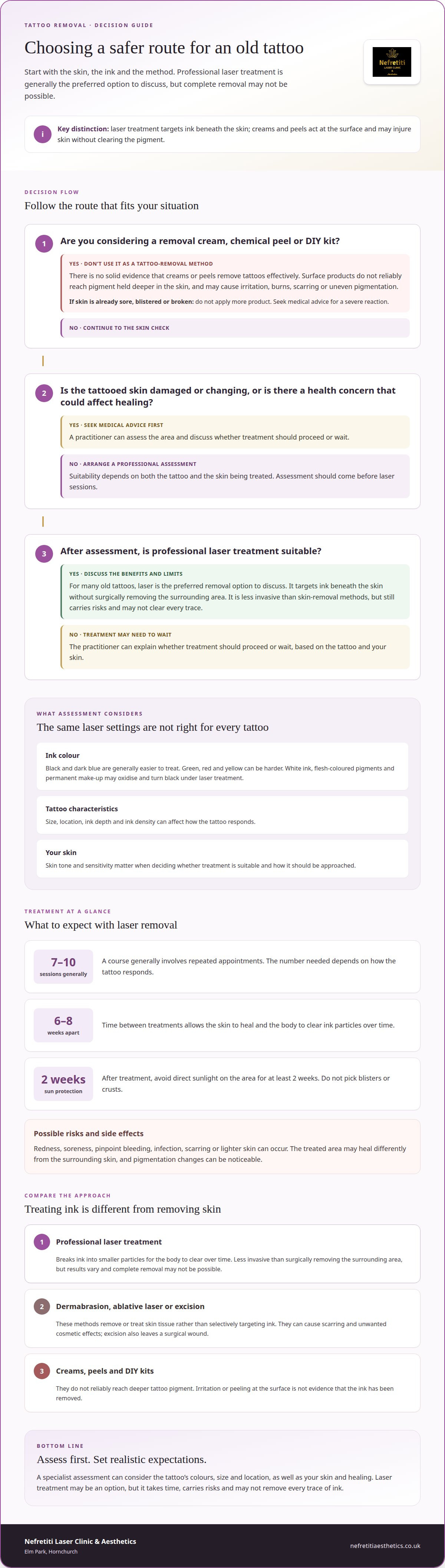
The fastest-looking option isn’t always the safest. For an old tattoo, the safest way to remove it is generally professional laser treatment, which breaks the ink into smaller particles for the body to clear over time. It usually takes several sessions, and complete removal may not be possible.
It’s understandable to want a simple solution, especially when a tattoo has faded or no longer feels right. Creams and peels may seem convenient, but they can irritate or damage the skin and may not reach ink held in its deeper layers. Treatment suitability also depends on the tattoo’s colours, size and location, as well as your skin.
This guide compares laser removal with other methods, explains the risks of DIY approaches and outlines what to look for in a specialist. It covers factors that affect fading, why sessions are spaced apart to allow the skin to recover, and what to expect from an assessment. The aim is to help you weigh the benefits and limitations before treatment.
Table of Contents
Which is the best tattoo removal method?
For many old tattoos, professional laser treatment is the preferred removal option. It targets ink beneath the skin without surgically removing the surrounding area. If you’re considering the safest way to remove an old tattoo, compare how each method affects both the pigment and the skin.
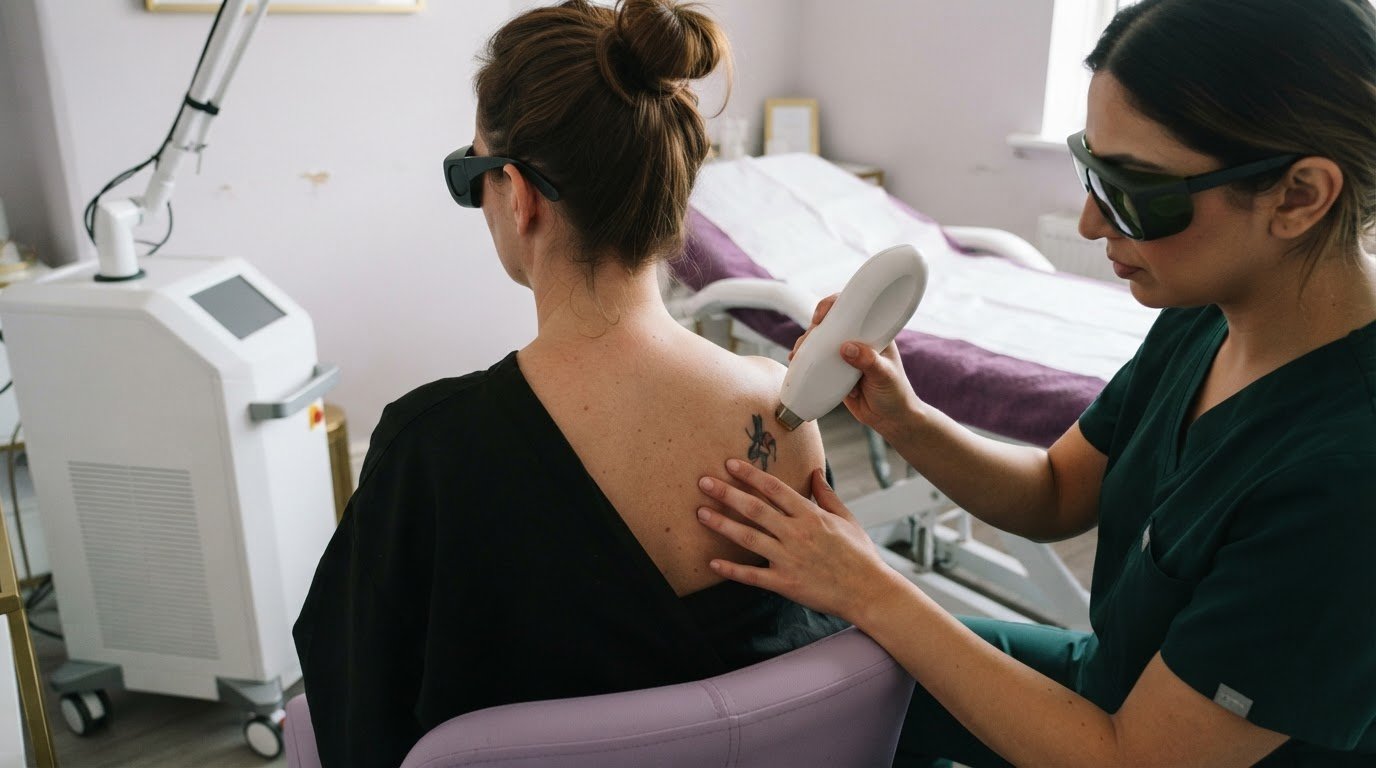
Tattoo pigment sits in the dermis, the skin’s second layer. Laser light breaks the ink into smaller particles, which the body clears over time. Older lasers delivered energy in nanoseconds; picosecond technology uses shorter pulses. Different wavelengths target different ink colours, making an assessment of the tattoo important.
Dermabrasion removes layers of skin, ablative lasers treat skin tissue, and surgical excision cuts out the tattooed area. These methods can cause scarring and unwanted cosmetic effects, and results vary. Excision also leaves a surgical wound. Laser removal is less invasive, but it still carries risks and may not clear every trace of ink. When considering the safest way to remove an old tattoo, it’s important to distinguish targeting ink from removing skin.
Treatment sessions and recovery
Laser tattoo removal uses repeated appointments, with time between treatments for healing and ink clearance. A course generally involves 7 to 10 sessions, spaced 6 to 8 weeks apart. The tattoo’s size, colours and ink density affect how it responds. After treatment, avoid direct sunlight on the area for at least 2 weeks, and don’t pick blisters or crusts.
Risks and side effects
Laser removal can cause redness, soreness, pinpoint bleeding, infection, scarring or lighter skin. The treated area may heal differently from the surrounding skin, and changes in pigmentation can be particularly noticeable where skin lightens. Aftercare matters too: leaving blisters or crusts alone helps reduce the risk of marks and other problems during healing.
When laser treatment may be unsuitable
Suitability depends on the tattoo and the skin being treated, so assessment should come before laser sessions. Seek medical advice first if you have a health concern that could affect healing, or if the tattooed skin is damaged or changing. A practitioner can assess the area and discuss whether treatment should proceed or wait.
Ink colour and skin tone
Ink colour affects how readily laser light can target a tattoo. Black and dark blue are generally easier to treat, while green, red and yellow can be harder. White ink, flesh-coloured pigments and permanent make-up may oxidise and turn black under laser treatment. Skin tone and sensitivity also matter, so the same settings aren’t appropriate for every person or tattoo.
Why home tattoo removal creams and chemical peels are not a safe alternative to professional treatment
Tattoo-removal creams and home peels may sound like simple ways to fade unwanted ink. But applying a product to the skin’s surface doesn’t reliably reach tattoo pigment held deeper in the skin. There’s no solid evidence that creams or peels remove tattoos effectively. They may irritate or injure skin without clearing the ink.
Some creams contain ingredients intended to irritate, exfoliate or lighten the skin. Redness or peeling at the surface doesn’t show that tattoo pigment has been removed. Strong irritation can instead leave a rash, burn or scar. Scarring may permanently change the area’s texture, while uneven pigmentation can make the tattoo and surrounding skin look less even.
Chemical peels work at the skin’s surface rather than selectively targeting tattoo ink. A peel can injure the treated area, particularly if its strength or application is unsuitable. Professional chemical peels have specific skin-treatment uses, but that doesn’t make them a tattoo-removal method. Using a peel over a tattoo risks skin damage without addressing the ink beneath it.
DIY kits don’t provide the same assessment or controlled treatment as a professional laser procedure. Skin sensitivity, tattoo location and ink colour all affect how treatment should be approached. Packaging alone can’t reliably account for those differences. The U.S. Food and Drug Administration says it hasn’t approved tattoo-removal ointments, creams or DIY kits. This refers to the US regulator, not a UK approval rule.
Be cautious of products that promise complete removal or fast results. A cream cannot make the body clear tattoo ink simply by causing the outer skin to peel. Don’t apply more product to skin that is already sore, blistered or broken, as further irritation may worsen the injury. If a product causes a severe reaction, seek medical advice rather than trying another removal treatment on the area.
The safer distinction is between removing surface skin and treating tattoo pigment. A professional assessment can consider the tattoo and the skin before discussing whether laser treatment is suitable. This helps avoid using a surface product that may harm the skin while leaving the tattoo visible. For a considered next step, book a tattoo-removal consultation.
Risks of unprofessional or DIY removal
Unprofessional removal can cause burns, infection, scarring or changes in skin colour. These complications may leave a more noticeable mark than the original tattoo. Treating skin without properly assessing the ink, area and healing response increases the risk. Tattoo particles sit beneath the surface, so damaging the outer skin doesn’t ensure the pigment disappears.
Dermabrasion removes layers of skin by abrasion rather than selectively targeting tattoo ink. Scarring and unwanted cosmetic effects can follow, and results vary. Recovery can take 2 to 3 weeks; pinkness or discolouration may fade over 8 to 12 weeks. During healing, the treated area should not be soaked in water. These recovery demands make skin injury a significant consideration.
Microdermabrasion exfoliates the skin’s surface, whereas tattoo pigment lies deeper, in the dermis. Surface abrasion therefore does not reliably reach the ink. Repeated or forceful abrasion can injure the skin without removing the tattoo. This can leave irritation or visible skin changes while the original pigment remains.
Cryotherapy uses extreme cold to damage treated tissue. Freezing tattooed skin does not selectively break down ink particles, so it can injure surrounding skin while leaving pigment behind. Treating a larger design or an area with ink at varying depths can produce an uneven result. Cryotherapy is not a controlled substitute for specialist assessment and laser treatment.
Salabrasion involves abrading skin with salt. The method may be repeated every few days until scarred tissue pulls away, causing deliberate skin injury rather than targeted ink removal. This can leave scarring, infection or uneven colour. Repeating abrasion on skin that hasn’t fully healed adds trauma, not a reliable way to clear ink.
At-home tools and unlicensed treatment also lack an individual assessment of the tattoo and skin. A mistake can cause burns, infection, scarring or lasting colour changes. Don’t try to remove a tattoo by cutting, scraping, freezing or repeatedly abrading it. If an area becomes infected, increasingly painful or fails to heal, seek medical advice. A qualified professional can assess the skin and explain the risks before treatment.
Choosing a qualified specialist
A safe consultation should assess both the tattoo and the skin before planning treatment. The specialist needs to understand the ink’s colours, density, location and depth, as well as your skin tone, sensitivity and relevant health history. These details affect whether laser treatment is suitable and how its risks should be explained. A quick look at a photograph cannot replace an individual assessment.
Ask who will perform the treatment and what relevant training and experience they have with tattoo-removal lasers. The practitioner should explain the technology in clear terms, including how wavelength choice relates to ink colour. They should also discuss possible side effects, such as soreness, infection, scarring or changes in skin colour. Clear answers matter more than impressive-sounding equipment names.
A well-informed plan should explain the likely course of treatment, the intervals between appointments and how progress will be reviewed. The specialist should make clear that fading varies and complete removal may not be achievable. For example, a black tattoo and a multicoloured design may respond differently. A responsible discussion covers limitations, not just the hoped-for result.
Before agreeing to treatment, make sure you understand the aftercare instructions and whom to contact with a concern. The practitioner should describe how the treated skin may look during recovery and how to protect it. Sun exposure and picking at blisters or crusts can complicate healing. Written guidance can help you follow clear, consistent advice after each appointment.
Notice how the consultation addresses your health and the treatment area. A history of skin problems, medicines or other health concerns may affect the assessment. The specialist should take time to understand these details rather than treating every tattoo identically. If the skin is broken, inflamed or changing, that needs to be considered before laser treatment.
Be cautious of claims promising complete removal, a fixed outcome or a quick course for every tattoo. Ink colour, depth, density and skin response all influence progress. A specialist should explain why your design may need a different approach from someone else’s. Pressure to book immediately, vague answers about risks or no discussion of aftercare are reasons to pause.
Choose a practitioner who communicates calmly, explains each decision and gives you time to consider the plan. Before the first appointment, you should understand the proposed approach, possible reactions and recovery guidance. This conversation helps you make an informed decision instead of relying on a broad promise that overlooks differences between tattoos and skin.
Comparing tattoo removal methods
Compare methods by asking what happens to the ink, surrounding skin and healing area. Laser treatment breaks pigment into smaller particles, which the body clears over time. Excision physically removes tattooed skin, while dermabrasion abrades it. Creams and peels act on the surface. These differences help explain how methods vary in scarring risk, recovery and likely fading.
Laser treatment is usually the less invasive option, but it still involves repeated appointments and recovery between sessions. Tattoo colour affects how laser light targets ink: black and dark blue are generally easier to treat than green, red or yellow. White and flesh-coloured pigments can behave unpredictably. Tattoo size, depth and density also shape the plan, so an old, faded design isn’t automatically simple to clear.
Surgical excision cuts out the tattooed area and closes the wound. It can remove a small design in one session, though larger tattoos may need more than one. The trade-off is a surgical scar and wound care. Excision removes skin rather than gradually fading pigment, so the tattoo’s size and position affect whether this approach is practical.
Dermabrasion sands or abrades the skin rather than selectively targeting ink particles. It can cause scarring and cosmetic changes, and results vary. Recovery can take longer than with less invasive approaches. Ablative lasers also remove or damage skin tissue, unlike tattoo-removal lasers that target pigment. These methods need careful consideration because skin injury can replace visible ink with a lasting mark.
Home creams, chemical peels and DIY kits are poor alternatives to professional procedures. They don’t reliably reach pigment held in the dermis, yet can cause irritation, burns or scars. Microdermabrasion also works at the surface. Salabrasion and cryotherapy can injure skin without selectively clearing the tattoo. A peeling or sore surface is not evidence that underlying ink has gone.
Use the tattoo itself to frame the comparison. A small, dark design raises different considerations from a large, multicoloured tattoo. Ink type, skin tone, sensitivity, location and overall health also influence the choice. Laser removal can leave residual ink, while surgical methods can leave scars. Complete removal isn’t always possible, even after multiple laser treatments, so discuss fading as well as removal when weighing outcomes.
The most useful comparison isn’t simply which method sounds fastest. Consider whether it targets pigment or removes skin, the likely recovery and the cosmetic trade-offs. A qualified assessment can relate those factors to the design and skin, helping you understand the advantages and limitations before choosing.
Nefretiti Laser Clinic & Aesthetics: Laser Tattoo removal
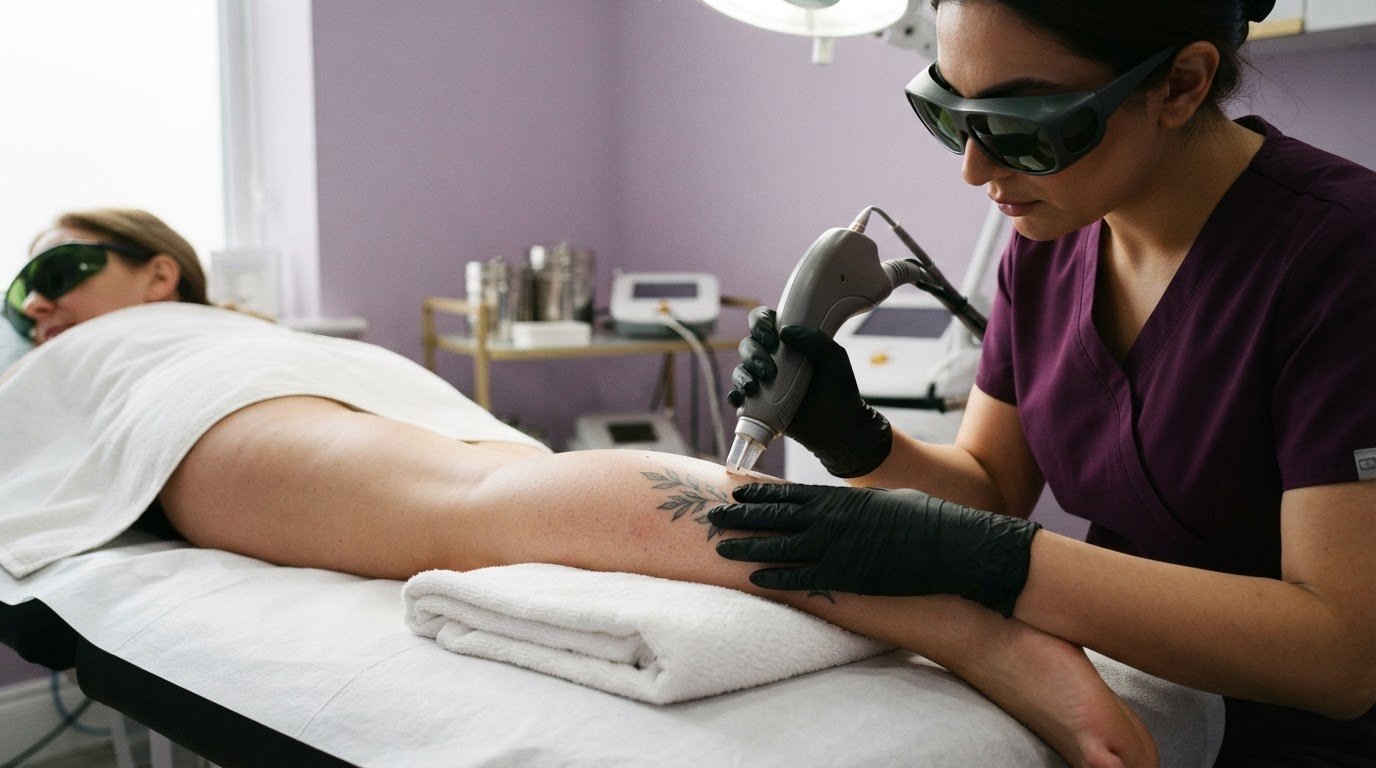
Nefretiti Laser Clinic & Aesthetics offers laser tattoo removal for people considering professional treatment for unwanted ink. Based in Elm Park, Hornchurch, the clinic welcomes clients from nearby areas, including Romford and Upminster.
A consultation is a useful next step if you want to understand whether laser treatment may suit your tattoo. Ink colour, size, location and skin tone can shape the assessment and treatment plan. You can discuss your priorities, what treatment may involve and the importance of aftercare before deciding how to proceed.
If you’re weighing up your options or would like to discuss tattoo removal, contact Nefretiti Laser Clinic & Aesthetics.
Take the next step with confidence
Deciding whether to begin tattoo removal is personal. A consultation gives you space to discuss what you’d like to change, share concerns about your skin and understand how a treatment plan could fit your goals. You can take time to consider the options before deciding whether to proceed.
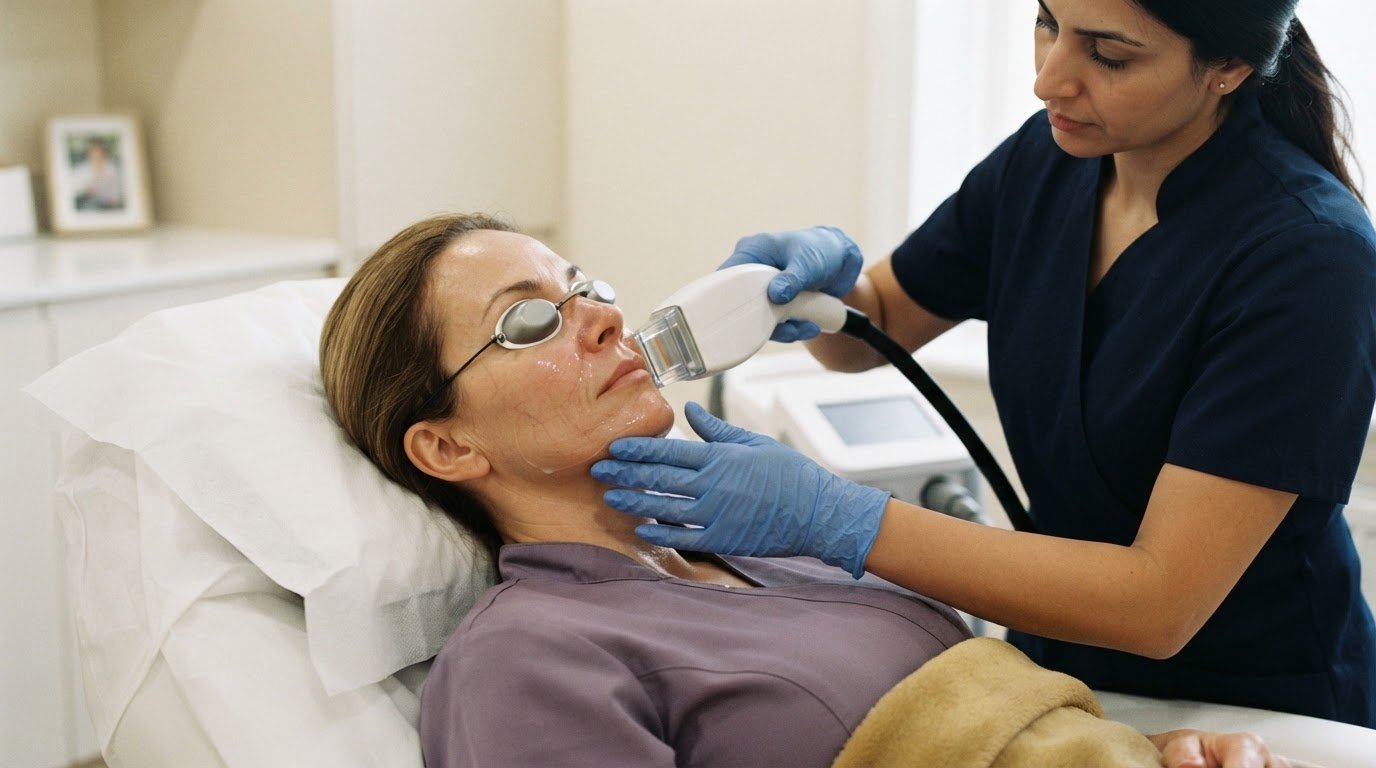
If you’re considering the safest way to remove an old tattoo, a focused conversation about your design is more useful than relying on broad promises. Nefretiti Laser Clinic & Aesthetics offers Laser Tattoo Removal, alongside Laser Hair Removal and Carbon Laser Facial treatments. You can book a consultation to discuss your tattoo and the questions that matter to you.
There’s no need to rush your decision. Clear information and a considered plan can help you move forward at a pace that feels right for you.
Frequently Asked Questions
What about home treatments?
Home creams, peels and removal kits aren’t a reliable way to clear tattoo pigment. Surface irritation or peeling doesn’t mean deeper ink has gone, and skin damage can leave soreness, burns or scars. Avoid applying more products to irritated skin. If a product causes a concerning reaction, stop using it and seek medical advice rather than trying another removal method.
What is the safest way to remove an old tattoo in the UK?
For many tattoos, professional laser treatment is the option to discuss first. The practitioner should assess your tattoo’s ink colours, size, location and depth, as well as your skin. A consultation helps establish whether laser treatment is suitable and what limitations to expect. Complete removal can’t be promised, so discuss whether fading would meet your aims before agreeing to treatment.
How does laser tattoo removal work and which laser types are safest?
Laser pulses break tattoo pigment into smaller particles, which the body gradually clears. No single laser type is safest for every tattoo: the suitable approach depends on the ink and the person’s skin. Older laser technology delivered energy in nanoseconds, while picosecond technology uses shorter pulses. A qualified practitioner chooses an approach based on the tattoo’s colours and assesses potential skin reactions.
How many laser tattoo removal sessions are usually needed and how far apart?
A course generally involves 7 to 10 sessions, with 6 to 8 weeks between appointments. Those are broad expectations, not a fixed schedule for every tattoo. A small, dark design may respond differently from a dense, multicoloured one. The practitioner can review fading as treatment progresses and decide whether another session is appropriate, allowing time between appointments for the skin to recover.
How do I choose a qualified, reputable tattoo removal clinic in the UK?
Look for a clinic that assesses your individual tattoo, explains its proposed laser approach and discusses realistic limits before treatment. Ask who will operate the laser, what tattoo-removal training they have and what aftercare support is provided. A clear consent discussion should cover potential skin changes and the option to pause. Be wary of promises of complete removal or identical results for every ink colour.
What UK regulations and qualifications apply to laser tattoo removal providers?
A clinic’s advertising alone doesn’t establish its qualifications or permissions. Ask what laser-specific training the practitioner has, what insurance covers the treatment and which local requirements the clinic follows. These questions help distinguish an operator’s experience from the clinic’s compliance arrangements. Nefretiti Laser Clinic & Aesthetics states that it is fully licensed and insured.
How does a professional clinic prepare clients for laser tattoo removal, and what aftercare should clients follow?
Preparation should include an assessment and discussion of your tattoo, skin and treatment plan. Nefretiti Laser Clinic & Aesthetics provides a consultation and patch test before treatment. Avoid direct sunlight on the tattoo area for four weeks before the first appointment. After treatment, protect the area from direct sunlight for at least two weeks, and don’t pick blisters or crusts.
How do laser removal, surgical excision and other tattoo removal methods compare for safety?
Laser treatment targets ink, while surgical excision removes tattooed skin and leaves a wound that may scar. Dermabrasion and ablative lasers can also injure skin and produce variable cosmetic results. Creams and peels act at the surface and can damage skin without clearing deeper pigment. The right comparison depends on whether you prioritise gradual fading, removal of a small design or avoiding a surgical scar.
Comments