


Thread vein treatment for the face and legs
Creams may make thread veins less noticeable, but they don’t remove the affected blood vessels. If you’re wondering how to get rid of thread veins on your face, professional treatments such as laser or IPL may help reduce their appearance; the right approach depends on the veins and the area being treated.
It’s understandable to want a simple cream or home remedy, especially when visible facial veins affect how you feel about your skin. These small red or blue lines are usually harmless, but they generally don’t disappear on their own, and new ones may form over time.
This guide explains what facial thread veins are and how treatment options for the face and legs differ. You’ll also learn what to expect from treatment, what can affect cost, and what creams, makeup and home remedies may realistically do, so you can make an informed decision about your next step.
Table of Contents
What are facial thread veins?
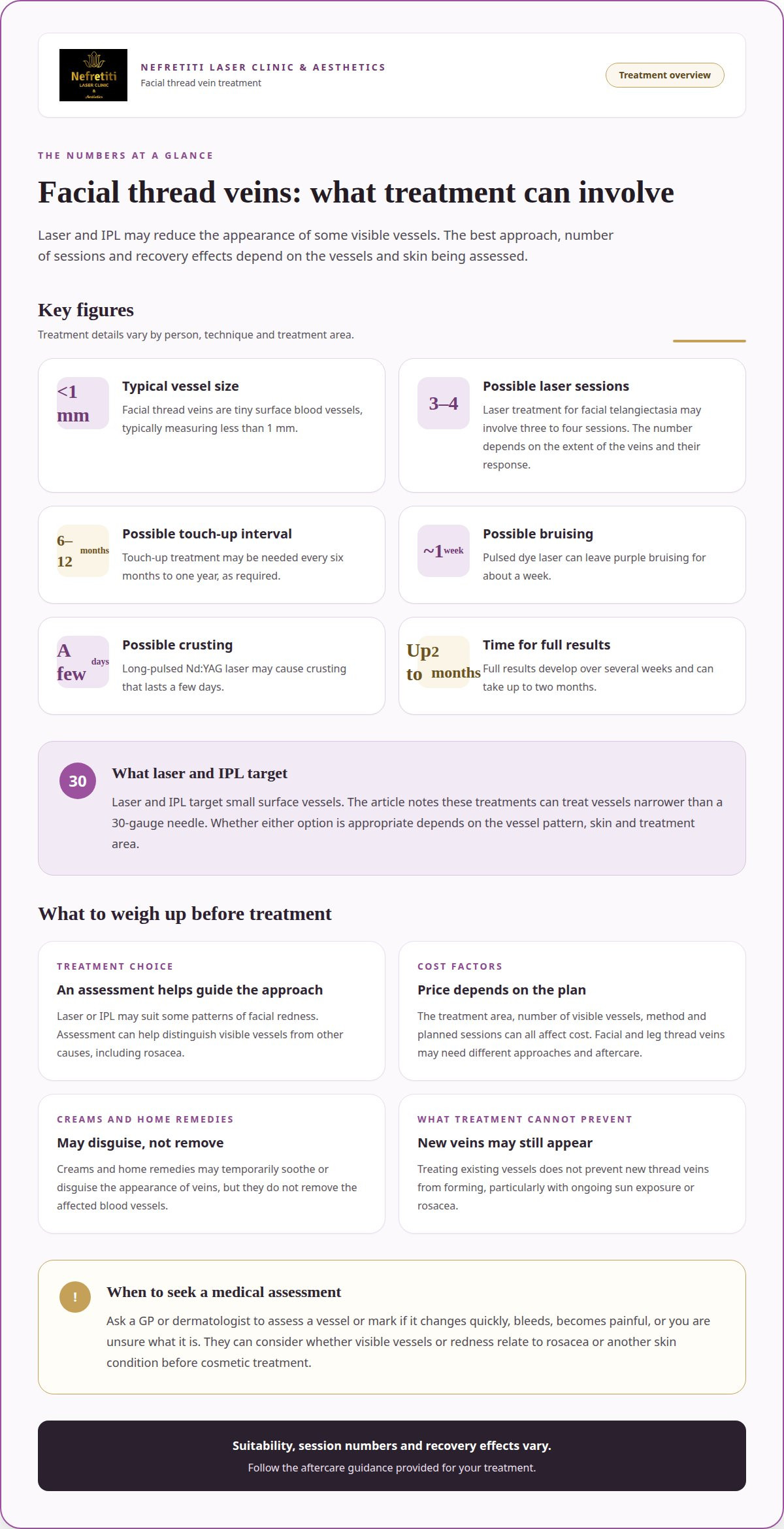
Facial thread veins, also called telangiectasia, are tiny surface blood vessels that show through as fine red or blue lines. They typically measure less than 1 mm and commonly appear around the nose and cheeks. Rosacea, sun exposure and skin injury can be associated with them. They are usually harmless and rarely cause symptoms, though their visible appearance may prompt cosmetic treatment.
Can facial thread veins go away on their own? Generally, no: existing facial thread veins don’t disappear without treatment, although how visible they look can vary. A consultation can help distinguish visible vessels from other causes of facial redness, including rosacea, before considering treatment.
Laser treatment directs energy towards the visible blood vessels, helping to close them while having minimal effect on nearby skin. IPL, or intense pulsed light, also targets small surface vessels and may be suitable for some patterns of redness. Laser and IPL can treat vessels narrower than a 30-gauge needle, but the appropriate option depends on the vessels and skin being assessed.
Several sessions may be needed. Laser treatment for facial telangiectasia may involve three to four sessions, but the number depends on the extent of the veins and how they respond. Touch-up treatment may be needed every six months to one year, as required. Treating existing vessels doesn’t prevent new thread veins from appearing, particularly with ongoing sun exposure or rosacea.
Veinwave, which uses short-wave diathermy to heat and treat individual vessels, is another treatment option but is not offered by Nefretiti Laser Clinic & Aesthetics. During an assessment, a practitioner can explain whether laser or IPL may suit the vessel pattern and treatment area.
Post-treatment effects depend partly on the technique used. Pulsed dye laser can leave purple bruising for about a week; long-pulsed Nd:YAG laser may cause crusting lasting a few days. Consider these visible effects when planning treatment around work or social events. Follow the aftercare instructions for your treatment, and report unexpected or worsening skin changes.
When should facial thread veins be checked by a GP or dermatologist? Seek an assessment if a vessel changes quickly, bleeds, becomes painful, or you’re unsure what a mark is. A GP or dermatologist can assess your skin and consider whether redness or visible vessels relate to rosacea or another skin condition before cosmetic treatment.
What facial thread veins are
Facial thread veins are small blood vessels close to the skin’s surface. Their medical name is telangiectasia, while “spider veins” describes their fine, branching appearance. They may appear as a single red line or a cluster of delicate vessels. On the face, they commonly show up around the nose and across the cheeks. Their colour may look red, purple or blue, depending on the vessel and surrounding skin.
The pattern offers clues, but appearance alone can’t explain why a vessel has become visible. For example, a fine line beside the nostril may be an isolated thread vein, while broader, persistent redness across the cheeks can have a different cause, including rosacea. Facial thread veins are usually a cosmetic concern, not a sign of illness. A doctor can assess a mark that is new, changing or difficult to identify.
Sun exposure is a common contributor: ultraviolet damage can enlarge small vessels and make them more visible. Rosacea can also be associated with facial thread veins, as can hormonal changes, skin injury and trauma. These factors don’t affect everyone in the same way. Protecting skin from direct sunlight can help limit further sun damage, although sunscreen won’t remove existing vessels or reverse changes that have already occurred.
Risk factors include age, family history and some medicines or health conditions. Facial spider veins can occur in younger adults, but they become more common with age. People over 40 are described as more vulnerable, and they are more common after 80. A family history of spider or varicose veins may increase susceptibility. Chronic corticosteroid use, hormonal birth control and hormone therapy are also listed risk factors.
Other associations include liver disease and connective tissue diseases. The presence of a facial thread vein doesn’t prove someone has either condition. Instead, a doctor considers the wider picture, including other symptoms, medication use and changes in the skin. You can explain when the vessels first appeared and whether redness fluctuates. That history helps distinguish an isolated cosmetic concern from a skin change that needs medical assessment.
To make an appointment useful, note the affected areas, any changes and medicines you take. A clinic assessment can then consider the visible pattern and relevant history before discussing ways to remove or reduce the vessels. If you’d like to discuss your concerns in person, you can book a consultation.
How much does thread vein removal cost?
The price depends on the treatment area, number of visible vessels, method and planned sessions. A facial assessment helps establish whether laser, IPL or another procedure may suit the vessels; leg treatment can involve different considerations and aftercare.
Laser treatment for facial thread veins is not routinely funded by the NHS. In unusually severe cases or exceptional circumstances, an Exceptional Funding Panel in the patient’s area may consider funding; patients can discuss eligibility with their GP. As a result, cosmetic treatment is usually privately funded.
Recovery depends on the technique and treatment site. Many people have no downtime after facial laser treatment, although temporary skin effects can still occur. Full results develop over several weeks and can take up to two months. After laser treatment, care for the skin carefully for two to three weeks after each appointment, and use high-factor sunblock on the treated area throughout the course.
How should you prepare and care for your skin afterwards? Before a facial procedure, discuss medicines, skin concerns and relevant health conditions during your consultation, and follow the specialist’s instructions. Afterwards, protect treated facial skin from sun exposure with high-factor sunblock throughout treatment and follow the aftercare plan. Avoid strenuous activities for about a week after treatment.
How do you choose a qualified UK practitioner? Look for someone who assesses your facial thread veins, explains the procedure, likely effects and aftercare, and discusses whether treatment is appropriate. A clear consultation should leave you understanding the proposed method and what recovery may involve.
Costs also depend on the treatment method, the size and number of areas, and the sessions needed. A quote should explain what the proposed plan includes, so you can understand the overall commitment rather than focus only on the cost of an individual appointment.
Before booking, consider work or social plans that could be affected by temporary bruising or swelling. If you’re ready to discuss a personalised plan, book a consultation.
Home remedies and creams
Creams and home remedies may affect how facial spider veins look, but they don’t remove damaged blood vessels. Products marketed for thread veins may moisturise skin or temporarily disguise redness, but they don’t close or clear visible vessels. If you want to remove an established vein, a cream alone can’t do that.
Apple cider vinegar, horse chestnut, vitamin C and coconut oil are sometimes suggested as home treatments. None makes facial spider veins go away. Applying these ingredients to delicate facial skin can also cause irritation, especially if your skin is already sensitive. Stop using a product that causes burning, itching or a rash, and seek healthcare advice if symptoms persist.
Cold compresses and cold face rollers may briefly cool the skin, but that temporary sensation doesn’t remove a spider vein or treat its underlying blood vessel. Makeup can conceal visible red or blue lines for the day. Use it as camouflage, not vein treatment, and remove it gently to avoid rubbing the facial area.
Fake tan can add colour to the skin and make some contrast less noticeable, but it doesn’t treat thread veins. It may also make redness or uneven colour harder to judge. If you use tanning products, keep them away from irritated skin and follow the product directions. Neither fake tan nor foundation changes the vessels beneath the surface.
Choose skincare for comfort and protection, not claims that it will eliminate veins. A gentle cleanser and moisturiser can support the skin barrier; sunscreen helps limit further sun damage. These steps won’t reverse existing vessel changes. Avoid scrubbing or aggressive exfoliation over visible vessels, as friction can irritate facial skin without improving their appearance.
Be cautious about online claims that a serum, supplement or kitchen ingredient will permanently clear veins. Before applying a new product to your face, check its ingredients and instructions. Patch testing can help identify irritation, but it can’t prove that a product treats blood vessels. A “natural” label also doesn’t mean a product is suitable for every skin type.
For a practical decision, distinguish temporary concealment from treatment. Makeup or a tint can cover the appearance for a specific occasion; creams and home remedies don’t remove the vessels. Professional treatment works differently by targeting visible vessels, and a qualified practitioner can explain whether it may suit you after assessing your skin. If redness is persistent, painful or changing, seek advice from a GP or dermatologist rather than relying on cosmetic products.
Thread veins on the face and legs
A thread vein on the face and a spider vein on the leg may look similar, but their location changes the assessment and treatment plan. Facial vessels often appear around the nose or cheeks. Leg veins can occur alongside larger varicose veins, so assessment considers whether visible marks are isolated or part of a wider pattern.
Thread veins are common across the UK. Around 70% of adults have them to varying degrees. Around one in five women in their 20s have thread veins, and around half of women have them by age 40. Over 70% of women have some by age 70. These figures show that visible veins are not limited to older adults.
Sun exposure is one factor associated with facial thread veins, and family history can also affect susceptibility. Limiting direct exposure and wearing sunscreen can help reduce further sun damage, but neither prevents every new vessel. Treating existing veins doesn’t stop new ones appearing, so future changes may occur on the face or legs.
An appointment for facial veins focuses on the visible vessels and the surrounding skin. Facial spider vein treatment doesn’t require a duplex scan. Leg assessment differs: a duplex scan can help assess the underlying veins before treatment, particularly when varicose veins are also present. This distinction matters because a visible thread vein may not be the only issue under consideration.
Options depend on the site and vessel type. Laser and IPL are commonly used for facial thread veins. Nefretiti Laser Clinic & Aesthetics offers thread vein treatments; sclerotherapy is not a service offered by the clinic. Thread vein treatment often involves two to six sessions, usually around four weeks apart. The number and spacing depend on the area and response, rather than following one plan for every patient.
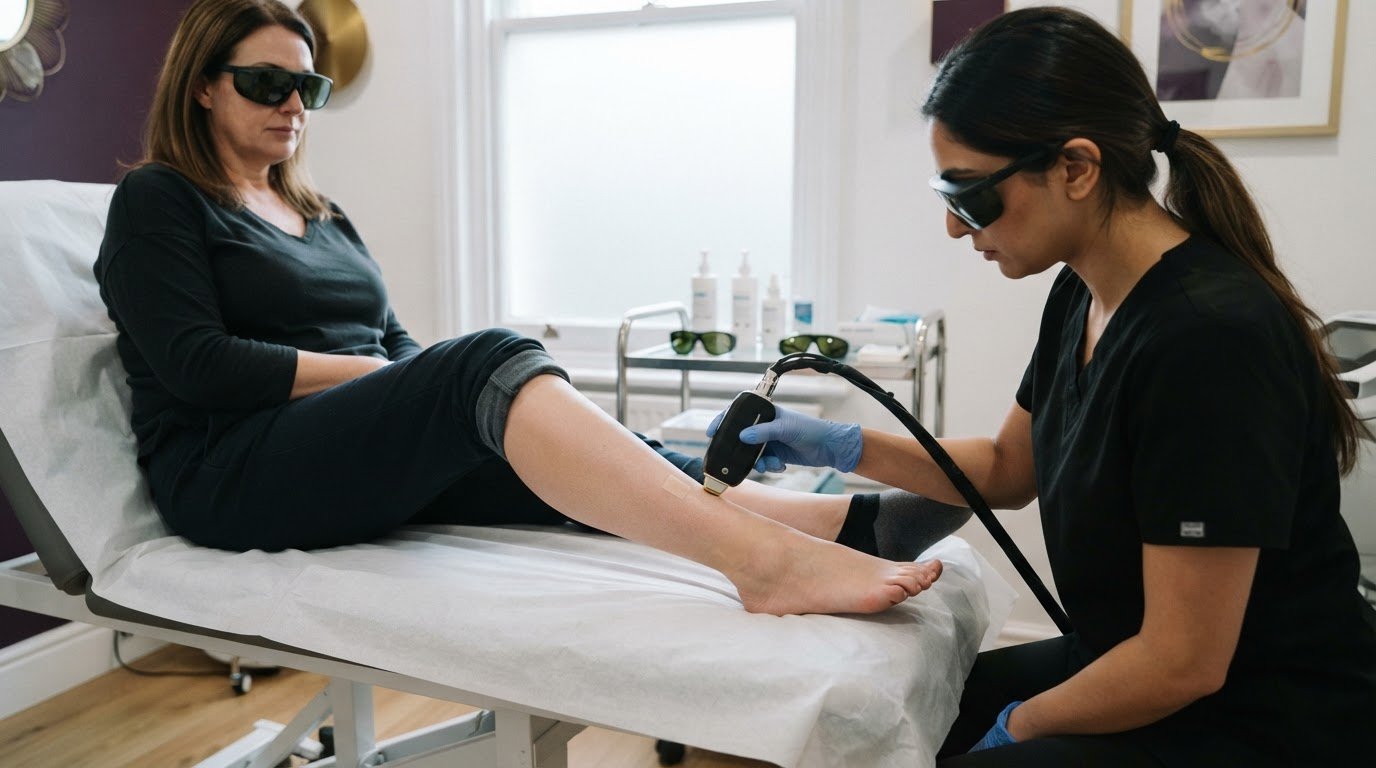
After treatment, follow the aftercare advice provided for the procedure and treated area. For leg treatment, a support stocking or compression garment is usually worn over the treated area for about a week. Raising your legs when resting during the first few days can also help with aftercare. Avoid swimming, horse riding and heavy weightlifting for about a week after treatment. Facial recovery differs, so aftercare should match the procedure and treated area.
The practical takeaway is that facial and leg veins need separate assessment, even when both look like fine surface lines. Ask the specialist to explain the treatment method, expected sessions and recovery steps for each area. Sun protection can support skin care, but it can’t remove existing vessels or guarantee that new thread veins won’t appear.
Nefretiti Laser Clinic & Aesthetics: Thread Vein Removal
Nefretiti Laser Clinic & Aesthetics offers Thread Vein Removal for people seeking professional assessment of visible facial or leg veins. A consultation gives you the opportunity to discuss the area that concerns you, your skin and relevant health history, then understand the treatment approach and aftercare. This can help you decide whether to proceed or seek medical advice first if a vessel has changed or its cause is unclear.
Based in Elm Park, Hornchurch, the clinic welcomes clients considering thread vein treatment from Romford, Upminster, Rainham, Dagenham, Gidea Park, Harold Wood, Harold Hill and surrounding areas in Essex. Treatment suitability and the plan are considered individually, rather than assuming the same approach will suit every vein or skin type.
Contact Nefretiti Laser Clinic & Aesthetics to discuss your concerns.
Choose a next step that feels right for you
If you’re considering how to get rid of thread veins on your face, first think about what you want help with and what you need to feel comfortable proceeding. Note which areas concern you, how long you’ve noticed them and whether your priority is appearance, understanding treatment or both. These details can make a consultation more useful and help shape a discussion around your goals.
An individual assessment gives you space to discuss suitability, possible effects and the practicalities of treatment before deciding. There’s no need to rush into a cosmetic procedure. Take time to consider the information, ask questions and decide whether the proposed approach fits your preferences and routine.
Thread Vein Removal is the relevant service for discussing visible facial or leg veins. Nefretiti Laser Clinic & Aesthetics also offers laser hair removal, laser tattoo removal and Carbon Laser Facial treatments for other treatment goals.
A calm, informed decision is a positive next step towards feeling more at ease with your skin.
Frequently Asked Questions
How does laser treatment work?
Laser treatment directs light into selected facial vessels, allowing the practitioner to treat visible areas individually. During assessment, the vessel pattern, skin tone and treatment area help guide the choice of settings and method. This is also the time to discuss whether redness appears alongside separate thread veins, since a plan for isolated vessels may differ from one addressing a wider area.
What are the after-effects of treatment?
After-effects can include temporary redness, swelling, bruising or crusting, depending on the procedure. Consider how your skin usually responds to irritation, particularly if you have an event soon afterwards. Follow your treatment’s aftercare instructions, and seek professional advice if a reaction feels severe, worsens rather than settles, or concerns you.
What causes spider veins on the face?
There isn’t always one identifiable cause for an individual spider vein. During an assessment, a practitioner may ask when you first noticed it, whether it has changed and whether you have other skin concerns. This context helps distinguish a cosmetic concern from broader facial redness that may need a different assessment. A visible vessel alone can’t diagnose an underlying health condition.
What is the treatment process and how many sessions will I need?
The process begins with a discussion of your concerns and an assessment of the treatment area. The practitioner explains the proposed approach and aftercare before proceeding. The number of appointments depends on the vessels being treated and how they respond, so a course is planned around your needs rather than a fixed schedule for everyone. Ask how progress will be reviewed before treatment begins.
Can I prevent facial thread veins?
No single measure prevents every facial thread vein. You can take sensible steps to reduce avoidable skin stress, such as protecting your face from strong sun and avoiding products that irritate it. These measures support skin care, but they can’t remove existing vessels or control factors such as family history. If you notice a new mark changing, arrange an assessment rather than trying to prevent it yourself.
Can I use makeup to hide my spider veins?
Yes, makeup can provide temporary camouflage. For a natural-looking finish, try a small amount of concealer on the affected area and blend gently rather than applying heavy layers. Check the colour in daylight before an occasion, as indoor lighting can change how redness appears. Remove makeup carefully at the end of the day; covering a vein doesn’t alter the vessel itself.
Can facial thread veins come back?
New vessels can appear after treatment, so improvement in a treated area doesn’t prevent future changes elsewhere. At a review, point out any new marks and explain when you first noticed them. This helps distinguish a new vessel from one that is still settling after treatment. A practitioner can then discuss whether further assessment or another appointment is appropriate for your concerns.
What causes thread veins on the face?
Facial thread veins may be associated with sun exposure, rosacea, hormonal changes or skin injury, but an association doesn’t establish the cause for any particular person. If you’re considering how to get rid of thread veins on your face, share relevant skin history and medicines during your assessment. This gives the practitioner useful context and helps identify when medical advice should come before cosmetic treatment.
Comments